
Emotional Safety vs. Emotional Comfort: Why We Often Get It Wrong
Emotional safety and emotional comfort are often confused—but they lead to very different outcomes for young people. This post explores why avoiding discomfort can limit growth, and how creating emotionally safe spaces allows youth to express themselves, navigate challenges, and build confidence and identity in a meaningful way.
There’s a phrase we hear often when working with youth:
“I just want them to feel comfortable.”
It sounds supportive. Protective, even. But there’s an important distinction that often gets missed—one that changes how we show up as parents, mentors, and leaders:
Emotional safety and emotional comfort are not the same thing.
And confusing the two can unintentionally limit growth.
What Is Emotional Comfort?
Emotional comfort is about ease.
It looks like:
Avoiding difficult conversations
Staying in familiar situations
Not feeling challenged or stretched
Keeping things “nice” and predictable
Comfort feels good. It reduces tension. It creates short-term peace.
But it also keeps things exactly as they are.
What Is Emotional Safety?
Emotional safety is different.
It’s not about avoiding discomfort, it’s about creating an environment where someone can experience discomfort without fear of rejection, shame, or harm.
Emotional safety sounds like:
“You can share what you’re feeling here.”
“It’s okay to not have this figured out.”
“You don’t have to agree with me to be respected.”
It creates space for:
Honest expression
Questions
Mistakes
Growth
Why This Distinction Matters for Youth
Young people are constantly navigating new experiences:
Identity development
Social dynamics
Emotional highs and lows
Exposure to new ideas and perspectives
Growth, by nature, is uncomfortable.
So if our goal is to keep them comfortable, we may unintentionally:
Shut down important conversations
Avoid topics that matter
Reinforce fear of discomfort
Limit their ability to build resilience
But if our goal is to create emotional safety, something different happens:
They learn they can handle discomfort and still be okay.
Where Adults Often Get Stuck
As adults, we want to protect.
So when something feels unfamiliar or challenging, our instinct is often to:
Step in quickly
Redirect the conversation
“Prepare” or control the situation
Reduce discomfort as fast as possible
But in doing so, we may be responding to our own discomfort, not the child’s.
This is especially true in conversations around identity, difference, or social change.
Sometimes, the young person is already navigating the experience with ease, until an adult introduces concern.
What Emotionally Safe Spaces Actually Look Like
An emotionally safe space is not one where:
Everyone agrees
Nothing uncomfortable is said
Differences are avoided
It is a space where:
People can show up as they are
Differences are respected, not feared
Questions are welcomed
Discomfort is allowed but supported
This is where real growth happens.
The Impact on Confidence and Identity
When young people feel emotionally safe, they:
Take more risks in expressing themselves
Build stronger self-awareness
Develop resilience
Form a more stable sense of identity
They learn: “I can feel uncomfortable and still be accepted.”
That belief is foundational.
Why This Matters for Magical Rebels
At Magical Rebels, we are not trying to create perfectly comfortable spaces.
We are creating emotionally safe ones.
Spaces where:
Identity can be explored without pressure
Conversations can be honest and evolving
No one has to shrink to fit in
Discomfort is part of growth, not something to avoid
For those who identify with the girl experience and lead a feminine lifestyle, this is especially important. Many have been taught to prioritize harmony over honesty, comfort over truth.
We are shifting that.
Final Thought
Comfort keeps things the same.
Safety allows things to grow.
And if we want young people to develop confidence, voice, and identity, we have to be willing to let them experience discomfort—within spaces where they know they are supported.
Because the goal isn’t to make everything easy.
It’s to make sure they are never alone in figuring it out.

The Magic of the In-Between: Why Growth Feels Uncomfortable
The space between who you were and who you’re becoming can feel uncertain, uncomfortable, and even overwhelming. but it’s also where real growth happens. This post explores why the “in-between” is a natural and necessary part of identity development, and how embracing this phase can help young people build confidence, clarity, and trust in themselves.
There is a space we don’t talk about enough.
It’s the space between who you were and who you’re becoming.
The space where nothing feels fully certain, but everything is shifting.
It’s uncomfortable.
It’s unclear.
And for many young people, it feels like something is wrong.
But this space….the in-between….is where the real work of growth happens.
Why the In-Between Feels So Hard
We live in a world that celebrates clarity.
We celebrate:
Confidence
Identity
Success
Knowing who you are
But we rarely talk about the process it takes to get there.
For youth and young adults especially, this creates pressure:
Figure it out quickly
Pick who you are
Be sure of yourself
When they can’t do that (which is completely normal), they often internalize it as failure.
But the truth is:
Uncertainty is not a problem to fix. It is a phase to move through.
What’s Actually Happening Beneath the Surface
During times of transition, the brain and emotional system are actively reorganizing.
Young people are:
Letting go of old identities
Trying on new ones
Reevaluating beliefs
Testing boundaries
Building independence
This is not linear. It is layered, messy, and often contradictory.
One day they feel confident.
The next day they feel unsure.
That doesn’t mean they’re lost.
It means they are becoming.
The Cultural Pressure to Skip the Middle
One of the biggest challenges young people and the neurodiverse face is the expectation to move through this phase quickly.
Social media amplifies this:
Everyone seems sure
Everyone seems confident
Everyone seems “fully formed”
But what they don’t see is the in-between behind those moments.
So they begin to believe:
I’m the only one who feels this way
I should have this figured out by now
This is where anxiety and self-doubt start to take hold.
Not because they’re doing something wrong, but because they’re trying to rush a process that cannot be rushed.
Nature Doesn’t Rush and Neither Should We
If you look at nature, everything moves in cycles.
There are seasons of:
Growth
Rest
Release
Renewal
Nothing blooms all year.
Nothing transforms overnight.
The in-between seasons, like early spring or late autumn—are quiet, uncertain, and often overlooked. But they are essential. They are where preparation and transformation happen beneath the surface.
Young people are no different.
They are not meant to always be in a state of clarity or confidence.
They are meant to move through cycles.
What Young People and the Neurodiverse Actually Need in This Space
They don’t need to be rushed.
They don’t need to be told who they are.
They need:
Permission to not have it all figured out
Language to understand what they’re experiencing
Space to explore without pressure
Support that doesn’t try to control the outcome
When we remove urgency, something powerful happens:
They begin to trust themselves.
The Role of Adults and Mentors
This is often the hardest part.
Adults want to help.
They want to guide, fix, and support.
But in the in-between, the most impactful thing we can do is hold space instead of rushing resolution.
That looks like:
Listening without immediately correcting
Asking questions instead of giving answers
Normalizing uncertainty
Resisting the urge to label or define too quickly
Because the moment we rush them out of the in-between, we interrupt the very process that builds confidence and identity.
Why This Matters for Magical Rebels
At Magical Rebels, we don’t see the in-between as something to move through quickly.
We see it as something to honor.
This is where:
Voice is discovered
Identity is shaped
Inner trust is built
For those who identify with the girl experience and lead a feminine lifestyle, this is especially important. Many have been taught to seek certainty outside of themselves—to look for validation, direction, or approval.
The in-between invites something different:
Coming back to yourself.
Final Thought
Growth does not happen in the moments where everything feels clear.
It happens in the moments where you’re unsure, questioning, and shifting.
The in-between is not a sign that you are lost.
It is a sign that something new is forming.
And if we can learn to sit in that space, without rushing, without fear, we begin to understand:
There is nothing wrong with becoming.
It was always meant to feel this way.
The Power of Journaling: Creating Space to Hear Yourself
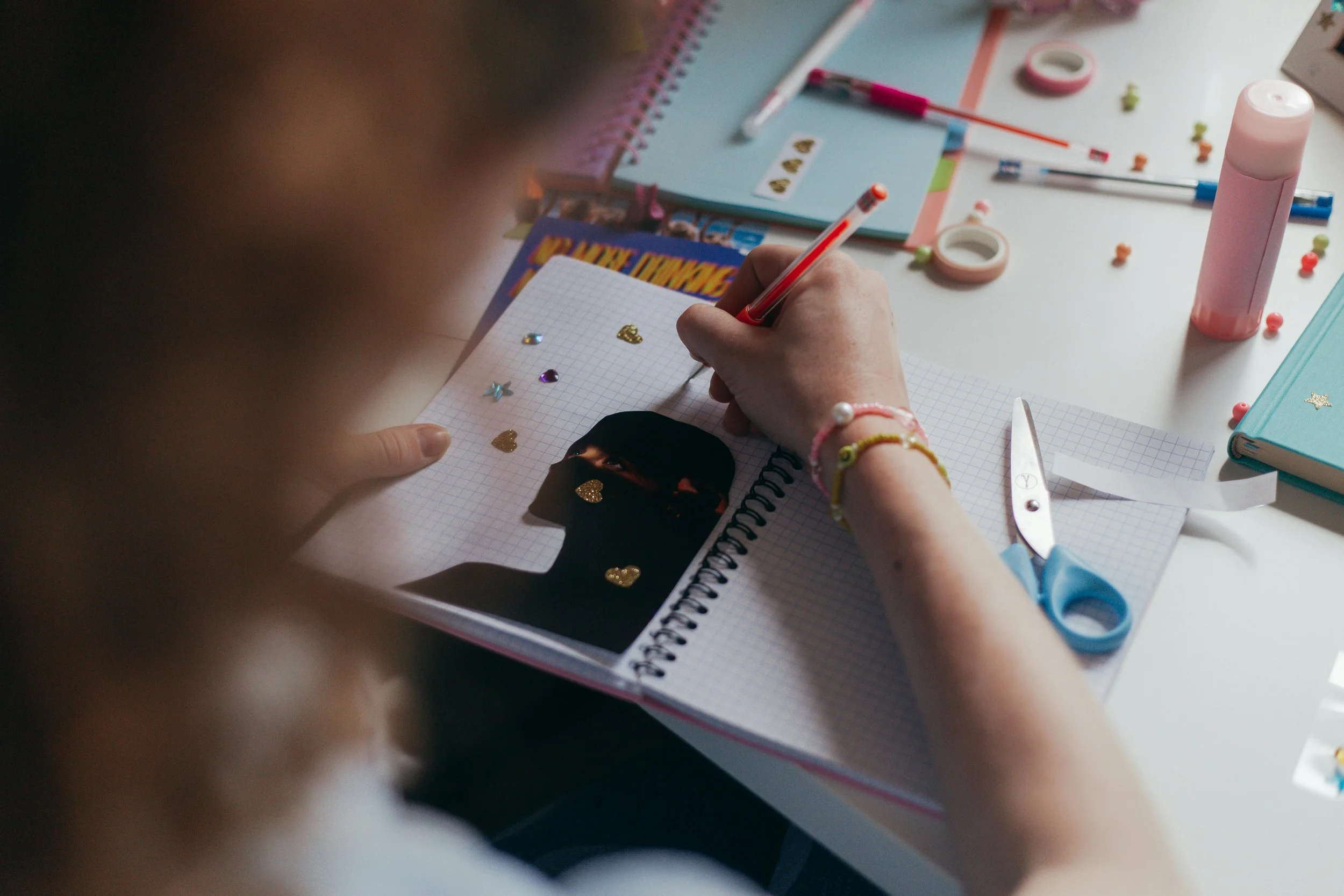
Journaling is more than just writing—it’s a powerful tool for self-discovery, emotional regulation, and identity development. In a world filled with constant noise and pressure, journaling creates a private space for young people to process their thoughts, understand their emotions, and reconnect with their inner voice.
In a world that is constantly asking young people to perform, respond, and keep up, there are very few spaces where they are simply allowed to pause and process.
Journaling is one of those spaces.
It is simple. Accessible. Often underestimated.
And yet, it is one of the most powerful tools for self-discovery, emotional regulation, and identity development, especially for youth and young adults.
Why Journaling Matters More Than Ever
Today’s youth are navigating a complex internal and external world:
Constant digital input
Social comparison
Identity exploration
Emotional highs and lows without always having language for them
What journaling offers is something rare:
A private, judgment-free space to make sense of it all.
No audience.
No algorithm.
No expectation to perform.
Just thought → reflection → understanding.
What Actually Happens When You Journal
Journaling is not just “writing things down.” It activates deeper cognitive and emotional processes.
1. It organizes thoughts
When everything feels overwhelming or scattered, writing forces thoughts into structure. What felt chaotic begins to make sense.
2. It builds self-awareness
Patterns emerge. Emotions become clearer.
You begin to notice:
What triggers you
What excites you
What matters to you
3. It regulates emotions
Instead of holding everything internally, journaling creates a release point. This reduces stress and helps process feelings in a safe way.
4. It strengthens identity
Over time, journaling helps answer foundational questions:
Who am I?
What do I believe?
What do I want?
This is especially critical for youth navigating identity and belonging.
Why It’s So Powerful for Young People
For many youth, especially those who identify with the girl experience or lead with emotional awareness, there is often pressure to:
Be agreeable
Be liked
Say the “right” thing
Journaling removes that pressure.
It becomes a space where they can:
Be honest without consequence
Explore thoughts they’re not ready to say out loud
Try on ideas, beliefs, and identities safely
It gives them ownership over their inner world.
Journaling as a Form of Personal Power
When practiced consistently, journaling becomes more than reflection, it becomes agency.
It shifts a young person from:
Reacting → Reflecting
Absorbing → Choosing
Feeling lost → Finding clarity
It teaches them that their thoughts and feelings are not something to ignore or suppress—but something to listen to and learn from.
It Doesn’t Have to Look One Way
One of the biggest barriers to journaling is the belief that there is a “right way” to do it.
There isn’t.
Journaling can look like:
Bullet points
Stream-of-consciousness writing
Drawing or sketching
Lists, questions, or reflections
Voice notes (for those who struggle with writing)
For some, especially neurodiverse youth or those who feel pressure around writing, removing structure is what makes journaling accessible.
The goal is not perfection.
The goal is expression.
Simple Ways to Start
If you’re introducing journaling to youth (or starting yourself), keep it low-pressure:
“What am I feeling right now?”
“What stood out to me today?”
“What is something I’m trying to understand?”
“What do I need more of right now?”
Even a few sentences creates momentum.
Why This Matters for Magical Rebels
At Magical Rebels, journaling is not just an activity, it is a practice of returning to yourself.
It aligns with everything we stand for:
Finding your voice
Understanding your identity
Creating space for reflection
Leading from within
For those navigating identity, belonging, and growth, journaling becomes a quiet but powerful anchor.
Final Thought
Young people don’t need more noise.
They need more space to hear themselves.
Journaling creates that space.
And in that space, something important happens:
They begin to trust their own voice.
The Wheel That Changed Everything: How I Found My Rhythm Again
Before, I used to think rest was weakness.
But the Wheel taught me that rest is rhythm.
When the earth sleeps, it isn’t failing — it’s regenerating.
The same is true for us.
For most of my life, I measured progress in straight lines.
Goals. Deadlines. Checklists. Finish lines.
But real life, especially for those of us who are neurodivergent, intuitive, or emotionally attuned, doesn’t move like that. It loops. It spirals. It breathes in and out.
It wasn’t until I began living in rhythm with the Wheel of the Year that things started to make sense again.
Remembering That Life Is Cyclical
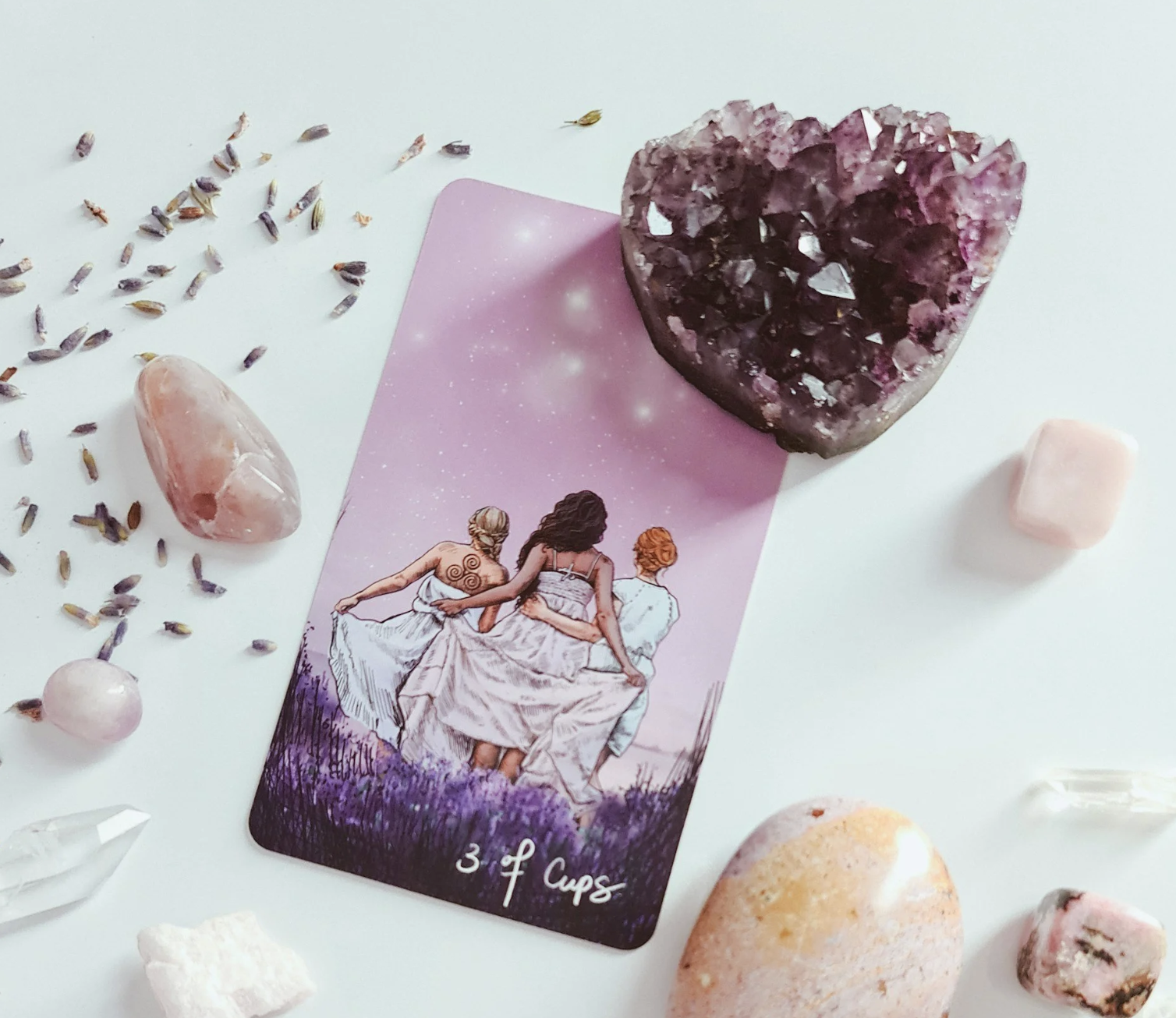
The Wheel of the Year, an ancient calendar that follows the turning of the seasons, invited me to slow down and listen.
To nature.
To my body.
To the whispers of my own energy.
Each season became a mirror.
Spring reminded me to begin again without guilt.
Summer showed me how to celebrate growth, not chase perfection.
Autumn taught me to let go of habits, expectations, and old versions of myself.
Winter became permission to rest without apology.
For the first time, I didn’t feel like I was “behind.”
I realized I wasn’t lost, I was just in a different season.
Healing My Relationship With Rest
Before, I used to think rest was weakness.
But the Wheel taught me that rest is rhythm.
When the earth sleeps, it isn’t failing; it’s regenerating.
The same is true for us.
When I began honoring the darker, quieter phases of my own cycle, the inward energy, the pauses, the moments when I couldn’t push any harder, I found that my creativity, my health, and even my self-compassion deepened.
Rest stopped being something I had to “earn.”
It became part of the practice.
A Framework That Honors Neurodiversity
As someone who experiences the world in vibrant colors and layered emotions, I’ve always needed structure with soul, a rhythm that grounds without confining me.
The Wheel gave me that.
It’s flexible but predictable, intuitive but structured, a compass that helps me align my work, my wellness, and my spirituality without burning out.
For neurodivergent minds, having a clear pattern to follow while still honoring our natural energy shifts can be revolutionary.
The Wheel permitted me to flow instead of fighting what was natural.
Why I Keep Coming Back
Every year, the Wheel turns.
Every time, I learn something new.
It’s not about “mastering” the cycle, it’s about participating in it.
Living in sync with the Wheel has turned my wellness journey into something sustainable, soulful, and sacred.
It’s why we built The Quiet Power Studio, a space for others to explore their own rhythm, their own version of balance, their own alchemy of rest and action.
Because in the end, health isn’t about fighting the seasons of your life, it’s about learning to dance with them.