

The People Holding Everything Together Are Often the Ones Burning Out
Being needed can feel meaningful. It can create belonging, identity, and purpose. But indispensability has a shadow side.
If you cannot step away without everything unraveling, you are not being supported. You are being used as infrastructure.
Praise does not redistribute labor.
Support does.
When someone becomes the unofficial keeper of every detail, emotion, relationship, and crisis, their competence can make their exhaustion almost invisible.
Every organization, family, classroom, troop, and community seems to have one.
The person who remembers what everyone else forgets.
She knows which deadline is approaching, which form was never submitted, which family needs a call, which conversation is quietly becoming a problem, and where to find the information no one else thought to save.
She notices when someone has stopped participating. She translates between people who cannot seem to understand each other. She smooths tension before it becomes conflict and fixes problems before most people know there was a problem.
When someone says, “Don’t worry—she’ll know,” this is the person they mean.
She is capable, trusted, and deeply needed.
She may also be disappearing beneath the weight of everything she has learned to carry.
Competence Can Become a Trap
The dependable person rarely wakes up one morning and chooses to become responsible for everything.
It happens one unfinished task at a time.
One moment of saying, “It will be faster if I do it.”
One crisis no one else notices.
One responsibility that was supposed to be temporary.
One person leaving without documenting what they knew.
One leader discovering that the capable person can be trusted with “just one more thing.”
Eventually, the entire structure begins depending on someone whose capacity everyone has mistaken for an unlimited resource.
Her competence hides the problem. Because the work keeps getting done, no one sees how fragile the system has become. The polished event, answered email, repaired relationship, and met deadline all become evidence that the arrangement is working.
But successful outcomes do not always come from healthy systems.
Sometimes they come from one person quietly paying the difference.
The Work No One Names
Some labor is easy to see. It appears on a project plan, calendar, job description, or meeting agenda.
Other labor lives between the lines.
It is remembering birthdays, sensitivities, preferences, and past conflicts.
It is recognizing that a short email will be misunderstood and rewriting it before it creates a problem.
It is checking whether the new person has what they need, following up after a difficult conversation, and noticing that two separate decisions are about to collide.
It is preparing everyone else to look prepared.
This work requires attention, emotional awareness, memory, judgment, and time. Yet because it often prevents visible problems rather than producing visible objects, it can be treated as though it simply happens.
The person performing it may not know how to explain why she is exhausted. Her task list does not capture the constant scanning, anticipating, translating, and holding.
She has not completed only her own work.
She has been functioning as the connective tissue for everyone else’s.
Being Needed Is Not the Same as Being Supported
There is a particular kind of praise frequently given to overfunctioning people:
“We couldn’t do this without you.”
It sounds like appreciation. Sometimes it is.
But if nothing changes after those words—if knowledge remains concentrated, responsibilities remain uneven, and rest remains impossible—they become less of a compliment and more of a warning.
Being needed can feel meaningful. It can create belonging, identity, and purpose. For someone accustomed to earning safety or approval through usefulness, being indispensable may even feel reassuring.
But indispensability has a shadow side.
If you cannot step away without everything unraveling, you are not being supported. You are being used as infrastructure.
Healthy appreciation sounds like gratitude followed by action:
“You have been carrying too much. What can we remove?”
“Who else needs to learn this?”
“What should we document so you are not the only person who knows?”
“Which decisions can someone else own completely?”
“How do we make it possible for you to rest without preparing everyone for your absence?”
Praise does not redistribute labor.
Support does.
Why “Just Ask for Help” Often Fails
When an overwhelmed person finally admits that they cannot continue, the response is often well-intended:
“You should have asked for help.”
But asking for help can become another task.
The person must identify everything she is doing—often while actively doing it. She must decide which pieces can be transferred, find someone capable and available, explain the context, provide instructions, answer questions, monitor progress, and step back in if something is missed.
She may also have learned that asking for help produces helpers, not owners.
A helper waits to be directed.
An owner notices, plans, decides, follows through, and communicates without requiring someone else to remain the project’s external brain.
This is the difference between saying, “Tell me what you need,” and saying, “I will own volunteer onboarding from beginning to end. I’ll update you Friday, and I’ll bring you only the decisions that require your authority.”
One offers another pair of hands.
The other removes part of the mental load.
Both can be useful. But they are not the same kind of help.
The Cost of Emotional Keeping
Some people become the emotional keepers of a group.
They listen to everyone’s frustration while sharing very little of their own. They calm the worried, encourage the discouraged, absorb anger aimed at the organization, and soften decisions made by people with more authority.
They become the person others trust because they are responsive, steady, and safe.
This work matters. It is also work.
Research has found a positive association between emotional labor and job burnout, and workplace conditions such as heavy demands, low control, inadequate support, and low reward are associated with emotional exhaustion. (Emotional labor and burnout meta-analysis; work environment and burnout review)
The World Health Organization describes occupational burnout as resulting from chronic workplace stress that has not been successfully managed, characterized by exhaustion, growing distance or cynicism toward the job, and reduced professional efficacy. It is classified as an occupational phenomenon rather than a medical condition. (World Health Organization)
This matters because burnout is too often framed as a personal wellness failure.
The person should meditate more. Take a bath. Improve her boundaries. Use her vacation time—while remaining available in case something happens.
Individual practices may offer relief, but they cannot repair a system that continues creating the harm.
You cannot journal your way out of chronic understaffing.
You cannot breathe deeply enough to make an impossible workload reasonable.
And no amount of self-care will make being everyone’s emotional container sustainable.
When Pattern Recognition Becomes an Obligation
Many neurodivergent people are exceptional pattern-noticers.
They may see connections others miss, anticipate breakdowns, remember complicated histories, or notice that a process is not working long before the results make the problem obvious.
That ability can be a powerful form of leadership.
It can also become a trap when noticing a problem automatically makes someone responsible for solving it.
The pattern-noticer raises an early concern and is told, “Can you put together a plan?”
She identifies an accessibility issue and is asked to lead the entire inclusion effort.
She notices that people are confused, so she becomes responsible for all future communication.
Soon, her awareness has generated an additional workload no one else shares.
People eventually learn that it is safer to stop noticing out loud.
A healthy organization does not punish insight with automatic ownership. It listens, determines where responsibility belongs, and ensures the person who surfaced the problem is not required to become its permanent caretaker.
Burnout Does Not Always Look Like Collapse
We tend to imagine burnout as someone unable to get out of bed or suddenly walking away.
Sometimes it looks like that.
But it may also look like irritability in someone who used to be endlessly patient.
It can look like delayed responses, missed details, numbness, cynicism, reduced creativity, or no longer volunteering for the extra task.
It can sound like, “I don’t care anymore,” from someone who cared far too much for far too long.
This change is often interpreted as an attitude problem.
People ask what happened to her commitment. They may describe her as negative, difficult, checked out, or “not herself lately.”
Rarely do they ask whether the old version of her was sustainable.
Perhaps the endlessly agreeable, constantly available, emotionally steady person everyone misses was surviving by overriding every signal that she needed rest, support, recognition, or change.
The goal should not be to restore her ability to tolerate the intolerable.
The goal should be to understand what the system required from her, and why.
When One Person Becomes the System
Organizations often discover their dependence too late.
The keeper becomes ill, takes leave, resigns, or finally establishes a boundary. Suddenly no one knows the process. Passwords cannot be found. Relationships go quiet. Deadlines appear from nowhere. Problems she prevented begin surfacing in rapid succession.
People say, “We had no idea she was doing all of this.”
That is the problem.
An organization that depends on hidden labor does not truly understand how it operates.
This is not only a wellness issue. It is an operational risk.
Sustainable systems distribute knowledge, decision-making, relationships, and responsibility. They document work before a transition. They cross-train people before an emergency. They assign clear owners. They create escalation paths that do not depend on knowing the one person who can “make things happen.”
They do not wait for the keeper to collapse before discovering what she was holding.
What Caring Leadership Does Differently
Caring leadership does not simply encourage overwhelmed people to take better care of themselves. It examines what the organization has made necessary.
It asks:
Who is carrying work that does not appear in their role?
Which responsibilities depend on personal memory instead of shared systems?
Who absorbs frustration created by decisions they did not make?
Who is expected to repair relationships without the authority to address the underlying problem?
Who receives more work because they are competent?
Whose absence would cause essential knowledge or relationships to disappear?
Are we offering helpers, or transferring genuine ownership?
What can be stopped, not merely reassigned?
The final question matters.
Sometimes there is no one else with capacity because the organization is trying to do more than its people can sustainably support. Redistributing an impossible amount of work only spreads the exhaustion.
Some things must be delayed, redesigned, reduced, or released.
Nature does not keep every branch simply because it once produced something valuable.
Pruning is not failure. It is how living systems protect what they still need to sustain.
You Were Never Supposed to Be the Entire Village
If you are the person holding everything together, your ability to carry it does not mean the weight is reasonable.
Your exhaustion is not evidence that you are weak.
Your boundaries are not a betrayal of the people who became accustomed to your overextension.
And your decision to stop anticipating, fixing, remembering, and absorbing everything does not mean you have stopped caring.
It may mean you have finally included yourself among the people deserving care.
If everything falls apart when one person rests, leaves, becomes sick, or finally says no, that person was never simply helping.
She was functioning as the infrastructure.
Caring leadership does not praise people for holding an unsustainable system together.
It helps build a system that does not require anyone to disappear inside it.

The Nervous System Is in the Room, Too
very workplace, classroom, family, and community is filled with nervous systems, not productivity machines. When we ignore that, we often mistake overwhelm for defiance, shutdown for disengagement, hesitation for incompetence, and a need for processing time as a lack of commitment.
People cannot consistently communicate, create, learn, or lead well when their bodies are preparing them to survive.
Every workplace, classroom, family, meeting, troop, and community is filled with nervous systems.
Not productivity machines. Not empty containers waiting to receive instructions. Not problems to manage.
Human beings, with histories, sensory needs, fears, responsibilities, relationships, and bodies that are constantly gathering information about whether it is safe to remain open or necessary to protect themselves.
We tend to forget this when someone is not behaving as expected.
The employee becomes quiet during a meeting.
The child argues over a seemingly simple direction.
The volunteer stops responding.
The student stares at an assignment but cannot begin.
The usually capable leader suddenly cannot make one more decision.
We call them disengaged, resistant, lazy, dramatic, unprofessional, or difficult.
Sometimes one of those descriptions may name part of what is happening. But sometimes we are looking at a nervous system responding to pressure—and mistaking that response for a character flaw.
Stress Changes What We Can Access
Stress is not inherently bad. A healthy stress response helps us react to challenges, focus energy, and move through moments that require action.
But when stress is intense, chronic, unpredictable, or experienced as uncontrollable, it can interfere with the very abilities we continue demanding from people: working memory, flexible thinking, attention, impulse control, and decision-making. Research examining stress and executive function has documented these effects across human and animal studies. (Girotti and colleagues)
This means a person under pressure may temporarily have less access to skills they genuinely possess.
They may struggle to find words.
They may forget information they know.
They may become rigid, defensive, unusually emotional, or unable to make a decision.
They may talk too much, stop talking altogether, leave the room, fixate on one detail, or agree to anything simply to end the interaction.
None of this automatically tells us what the person intends. A stress response is not a complete explanation for every behavior, and it does not erase responsibility for harm. It does, however, give us useful information about what may need to happen before a productive conversation is possible.
If someone has lost access to their ability to process, demanding that they “just think” is unlikely to restore it.
Regulation Is Not the Same as Calmness
We often use the word regulated to mean quiet, pleasant, and easy for other people to be around.
That is not quite the same thing.
A regulated person may still be angry. They may cry. They may need to move, pause, ask for space, use a direct tone, or say something another person does not want to hear.
Regulation does not mean having no feelings. It means having enough connection to yourself and enough access to your abilities to choose how you respond.
Likewise, a person can appear calm while being deeply disconnected from themselves. They may be frozen, shut down, masking, or automatically agreeing because disagreement does not feel safe.
Visible compliance is not always regulation.
This is why “calm down” so often fails. It can become another demand to make an internal experience less inconvenient for everyone else.
A more useful question might be:
What would help this person regain access to themselves?
Sometimes that means fewer words. More time. A written explanation. Clearer expectations. A glass of water. Movement. Privacy. A quieter space. A chance to finish processing before being required to answer.
These are not magical cures, and different people need different things. The point is not to develop a universal regulation ritual. The point is to become curious before becoming condemning.
Regulation Before Problem-Solving
When emotions are high, adults often rush toward the lesson.
We want a child to understand why the behavior was wrong. We want the employee to explain what happened. We want the other person to hear our perspective, accept responsibility, and promise a better outcome.
Those conversations matter.
But timing matters, too.
A person who is flooded may be physically present while having very little capacity for reflection. Adding more questions, consequences, lectures, or urgency can turn a difficult moment into a power struggle.
Pausing is not the same as abandoning accountability.
It can sound like:
“We are going to come back to this, but we do not have to solve it in this exact moment.”
“Take a few minutes. I want to hear what you think when you are ready.”
“Would it be easier to talk about this or write it down first?”
“I can see that this is escalating. Let’s pause before either of us says something we will need to repair.”
Regulation does not replace the conversation. It makes a real conversation more possible.
Neurodivergence Changes the Conversation
The same environment is not experienced the same way by every nervous system.
Noise that one person barely notices may make it impossible for another person to think. An open-ended request may feel freeing to one employee and paralyzing to another. A spontaneous meeting may be energizing for one person and remove the preparation another person needs to participate fully.
Some people process language slowly but think deeply. Some communicate more clearly in writing. Some need movement to listen. Some make less eye contact when concentrating. Some can manage sensory, social, and executive-function demands for hours and then appear to “fall apart” once they reach a safer place.
None of these differences automatically indicate disrespect, incompetence, or lack of commitment.
Neurodivergent inclusion is not simply allowing people into the room. It is questioning whether the room was designed around one narrow idea of how attention, communication, leadership, and professionalism should look.
This does not mean every environment can meet every preference at every moment. It means we should stop treating one nervous system’s comfort as the neutral standard against which everyone else is measured.
Sometimes the Environment Is the Problem
We place enormous responsibility on individuals to regulate themselves inside systems that are actively keeping them dysregulated. We mean well, we just are not seeing the full picture.
We recommend breathing exercises to employees facing chronic understaffing.
We teach children coping skills while leaving them in loud, unpredictable, or humiliating environments.
We tell volunteers to create better boundaries while continuing to build programs that depend upon their unpaid overfunctioning.
We offer wellness resources without addressing impossible workloads, unclear expectations, constant urgency, or leaders who punish honest feedback.
Individual practices can help. A walk, a pause, a grounding exercise, time outdoors, or a few quiet breaths may offer a moment of relief. But personal regulation cannot permanently compensate for structural harm.
The CDC’s workplace guidance identifies conditions such as overload, inadequate staffing, role ambiguity, technology overload, and unsupportive relationships as psychosocial hazards, not personal resilience failures. It also notes that supportive leadership can reduce some of the negative effects of job stress. (CDC/NIOSH, supportive leadership guidance)
Sometimes the most important regulation strategy is not teaching a person to tolerate the environment more quietly.
It is changing the environment.
The Most Regulated Person Should Not Have to Carry Everyone
In many groups, one person becomes the emotional keeper of the room. Here’s and example:
She notices tension before anyone else.
She softens difficult messages, anticipates reactions, mediates conflict, and absorbs the emotions other people do not know how to hold.
Her steadiness becomes a resource everyone uses.
This can be a form of leadership. It can also become an invisible burden.
The most regulated person in the room may have influence, but she should not be expected to regulate everyone else. Care does not mean becoming the container for every feeling, crisis, or consequence.
Healthy groups distribute that responsibility. Leaders manage their own reactions. Adults repair after losing control. Expectations are made clear. People are allowed to ask for what they need without making one empathetic person responsible for meeting every need.
Co-regulation and connection matter. So do boundaries. You can offer steadiness without surrendering yourself.
What a More Regulated Environment Looks Like
A regulated environment is not one where no one becomes upset.
It is one where people do not have to remain on guard all the time.
It might include:
Expectations that are clear before something goes wrong
Room to ask questions without being treated as difficult
Predictability where predictability is possible
Honest notice when plans must change
More than one way to communicate or participate
Pauses before high-stakes decisions
Private correction instead of public humiliation
Workloads that acknowledge human limits
Leaders who can hear concern without treating it as disloyalty
Repair when someone causes harm, regardless of their position
These practices do not remove standards. They make standards easier to understand and more possible to meet.
They also make it safer for people to bring forward the information a group most needs: the mistake, the concern, the boundary, the early warning, or the unfinished idea.
Nature Does Not Live in a Constant State of Production
The natural world moves through expansion and contraction, activity and dormancy, blooming and release.
We admire those rhythms in nature while treating them as personal failures in ourselves.
We expect endless summer from human bodies: constant growth, visible productivity, quick responses, and fruit on demand.
But no living system can remain at full output forever.
Seasonal living reminds us to notice. What is asking for energy? What is depleted? What needs pruning? What needs protection? What cannot be rushed simply because a calendar says it is time?
This is not permission to abandon every uncomfortable responsibility. It is an invitation to stop interpreting every human limit as a moral failing.
Rest is not always avoidance.
Slowness is not always resistance.
Silence is not always disengagement.
And urgency is not always truth.
A Different Question
Before asking, “How do I make this person behave differently?” we can pause and ask:
“What is their nervous system responding to?”
“Do they have access to the skill I am asking them to use right now?”
“What belongs to this individual, and what belongs to the environment?”
“What would help us return to this conversation with more capacity and honesty?”
These questions do not remove accountability. They make accountability possible.
People are more than their hardest moment. They are more than what they produce under pressure. They are more than the behavior we can see from outside.
The nervous system is already in the room.
Perhaps quiet power begins when we finally learn to account for it.

You Cannot Shame a Child Into Becoming Their Best Self
Accountability helps children understand their choices. Shame teaches them to question their worth.
Accountability helps children understand their choices. Shame teaches them to question their worth.
There is a moment many adults recognize.
A child has done something they should not have done. Perhaps they lied, ignored a direction, hurt someone’s feelings, lost control in public, or made the same mistake for what feels like the hundredth time.
The adult is frustrated. Maybe embarrassed. Maybe overwhelmed. Maybe already carrying far more than anyone can see.
And out comes a sentence meant to make the child understand:
“What is wrong with you?”
“You know better.”
“Why do you always do this?”
“You are being ridiculous.”
“Everyone is looking at you.”
The intention may be correction. The message the child receives is often something else entirely:
I am the problem.
That is the line between accountability and shame.
Accountability helps a child understand: I made a choice that caused harm, and I can take responsibility for what happens next.
Shame teaches: My mistake revealed who I really am—and who I am is bad, difficult, disappointing, or unworthy of belonging.
Children need boundaries. They need correction, consequences, and adults who are willing to tell them the truth. But we cannot shame a child into becoming their best self.
We can only make them afraid to let us see the parts that are still learning.
Shame May Create Compliance, but Compliance Is Not the Same as Growth
Shame can appear effective in the moment.
A child becomes quiet. They stop arguing. They apologize quickly. They promise never to do it again. From the outside, it may look as if the message finally got through.
But silence does not always mean understanding. An apology does not always mean reflection. Sometimes the child has simply learned that the fastest way back to safety is to become small.
The American Academy of Pediatrics recommends discipline that teaches and reinforces appropriate behavior rather than strategies that threaten, insult, humiliate, or shame children. Its guidance recognizes that discipline is supposed to help children learn—not merely make unwanted behavior disappear in front of an adult. (American Academy of Pediatrics)
When children expect humiliation, they may become more focused on escaping the adult’s anger than understanding the effect of their choices. They may hide mistakes, blame someone else, lie to avoid punishment, attack back, or become intensely self-critical.
Research has repeatedly found meaningful differences between shame-proneness and guilt-proneness. In one study spanning children through adults, shame-proneness was associated with more destructive responses to anger, while guilt-proneness was associated with constructive responses such as corrective action and non-hostile discussion. (Tangney and colleagues)
But this does not mean adults should make children feel guilty. Guilt-tripping is still manipulation. The healthier goal is to keep the child’s attention on the specific behavior, its impact, and what repair could look like—without turning the behavior into a verdict on the child’s character.
Correct the Choice, Not the Child’s Identity
There is an enormous difference between saying:
“You are so mean.”
and:
“What you said was hurtful. Let’s talk about what happened and how you can help repair it.”
One defines the child. The other names the behavior.
“You are lazy” is an identity.
“This responsibility was not completed” is information.
“You are a liar” tells a child what they are.
“You told me something that was not true, and that affected my trust” tells them what happened and what now needs attention.
Specific language does not excuse the behavior. It makes accountability clearer.
When we separate the child from the choice, we preserve the possibility of change. We tell them: You are still part of this family, classroom, troop, or community. This choice matters. The harm matters. And you are capable of doing something different.
Belonging should not disappear the moment accountability enters the room.
In fact, children are more able to face the truth when they know the truth will not cost them their fundamental worth.
“You Know Better” Does Not Always Mean “You Can Do Better Right Now”
Adults often assume that if a child can explain a rule, they can consistently follow it.
But knowing what to do and being able to access that knowledge in a difficult moment are not always the same thing.
A child may know they should use a calm voice and still lose access to that skill when overwhelmed. They may understand a direction but struggle to begin a task. They may want to stop interrupting but have difficulty holding a thought. They may recognize another person’s feelings after the moment has passed but be unable to process those feelings while their own nervous system is flooded.
This is especially important for neurodivergent children, highly sensitive children, children with trauma histories, and children whose communication or regulation does not match adult expectations.
How often is a child called lazy when they are stuck?
Disrespectful when they are dysregulated?
Dramatic when they are overwhelmed?
Manipulative when they do not yet have the language to explain what is happening inside them?
Understanding what contributed to a behavior is not the same as pretending the behavior did not matter. Context and accountability can exist together.
We can say, “I understand that you were overwhelmed, and it is still not okay to hurt someone.”
We can help the child regulate, then return to what happened.
We can adjust an environment, teach a missing skill, and still expect repair.
The goal is not to remove responsibility. It is to give the child enough support to actually carry it.
Sometimes Shame Begins With an Overwhelmed Adult
This is an uncomfortable part of the conversation, but an important one.
Adults do not always use shame because they are cruel. Sometimes we reach for shame because we are dysregulated.
The child’s behavior makes us feel ignored, powerless, embarrassed, disrespected, or judged. We want the behavior to stop immediately, and making the child feel bad can seem like the fastest way to regain control.
Many adults are also repeating what was modeled for them. They were called selfish so they would share. Lazy so they would work harder. Dramatic so they would stop crying. Disrespectful so they would stop questioning an adult.
They learned to behave—but often at the cost of trusting their own needs, emotions, or perceptions.
Naming this is not about shaming parents, teachers, or youth leaders for having used shame. That would only recreate the very pattern we are trying to interrupt.
Adults are allowed to be learning, too.
The question is not whether we have handled every moment perfectly. None of us have.
The question is what we do when we realize we caused harm.
Repair Is Part of Leadership
An adult apology does not weaken authority. It demonstrates what accountability looks like.
It can sound like:
“I was frustrated, but the way I spoke to you was not okay.”
“I called you lazy when I should have asked what was making the task difficult.”
“Your choice still needs to be addressed, and I want to address it without attacking who you are.”
“I embarrassed you in front of other people. I am sorry. You did not deserve that.”
Notice that repair does not require the adult to erase the original boundary. Both truths can remain:
Your behavior was not okay, and neither was mine.
That is powerful modeling. It teaches children that accountability is not a punishment reserved for the person with the least power. It is a practice that protects relationships.
What Accountability Can Sound Like
Accountability is not vague niceness. It is clear, grounded, and connected to action.
It asks:
What happened?
Who was affected?
What were you feeling or needing in that moment?
What part of this belongs to you?
What can you do to repair the harm?
What support or skill might help you make a different choice next time?
Not every child will be ready to answer immediately. A flooded nervous system is rarely prepared for a thoughtful conversation. Sometimes the most responsible choice is to create safety, allow time for regulation, and return to accountability when the child can participate in it.
That is not “letting them get away with it.”
It is choosing learning over performance.
Children Are Still Becoming
Every child is in the middle of becoming someone.
They are experimenting with power, truth, independence, belonging, emotion, and repair. They will make choices that inconvenience us. They will misuse skills they have only just begun to develop. They will sometimes know better and still fail to do better.
The adults around them become part of the voice they carry into that becoming.
Will that voice say:
You always ruin everything?
Or will it say:
This caused harm. Let’s tell the truth, make what repair we can, and practice another way.
A child should be able to make a mistake without believing the mistake has revealed their true identity.
Accountability says, “This choice caused harm, and we need to repair it.”
Shame says, “You are the harm.”
Children deserve adults who understand the difference.
And perhaps the quiet rebellion is choosing to become those adults—even if no one chose it for us.

Caring Is a Leadership Strategy-but It Should Never Require Your Self-Abandonment
The leader is the person who can make the hardest decision without becoming emotional. She can absorb endless pressure, keep moving when everyone else is exhausted, and set aside her own needs for the good of the group.
She never lets it get to her. She never asks for too much. She is endlessly available, endlessly capable, and somehow never tired.
There is an old story about leadership that many of us have inherited.
The leader is the person who can make the hardest decision without becoming emotional. She can absorb endless pressure, keep moving when everyone else is exhausted, and set aside her own needs for the good of the group. She never lets it get to her. She never asks for too much. She is endlessly available, endlessly capable, and somehow never tired.
It sounds impressive.
It is also a remarkably efficient recipe for burnout.
I recently listened to an episode of The Curiosity Shop with Brené Brown, Adam Grant, and Simon Sinek called “The Highest Performance Strategy Is Caring About People.” Their conversation explored something many workplaces still struggle to understand: care, love, trust, and human connection are not distractions from good leadership. They are part of what makes good work possible.
People do better when they know they matter.
They are more willing to tell the truth, ask for help, share an unfinished idea, admit a mistake, and try something difficult when they do not have to spend all their energy protecting themselves.
That is not softness. That is how we create the conditions in which people can actually grow.
But there is another piece of this conversation that matters, especially for the thoughtful, sensitive, highly responsible people who have been caring for everyone around them for a very long time.
Care should never require your disappearance.
When Care Becomes Self-Abandonment
Many of us were not simply taught to care. We were taught to anticipate. ←(Read that Again, Friend)
Notice the shift in someone’s voice. Smooth over the tension. Remember what everyone needs. Make the plan. Carry the emotional temperature of the room. Become easier, quieter, more flexible, and less needy so no one else has to feel uncomfortable.
Eventually, this can begin to look like leadership. You become the dependable one. The safe one. The person everyone comes to because you will listen, fix, organize, remember, and stay late.
And perhaps you are very good at those things.
But being good at carrying something does not mean you should be asked to carry it forever.
Care becomes self-abandonment when you consistently override your own capacity to protect everyone else from disappointment. It happens when you say yes before checking what the yes will cost you. It happens when you hide your needs, tolerate harmful behavior, or take responsibility for emotions and outcomes that do not belong entirely to you.
It can look generous from the outside while slowly hollowing you out from within.
Care Is Not the Same as Keeping Everyone Comfortable
Real care is not endless agreement.
Sometimes care sounds like, “I need more time.”
Sometimes it sounds like, “That expectation is not sustainable.”
Sometimes it is a clear no, an honest question, a difficult conversation, or the decision to stop rescuing someone from the natural consequences of their choices.
That does not make you cold. It makes your care honest.
Care without boundaries becomes depletion. Accountability without care becomes fear. But when care and accountability live together, people are given something powerful: the safety to tell the truth and the responsibility to do something with it.
A caring leader does not remove every discomfort. She helps create an environment where discomfort can be handled without humiliation. She does not promise that no one will ever be disappointed. She makes it safe to speak honestly about what is possible, what is not, and what must change.
The Nervous System is in the Room, Too
Every workplace, classroom, family, and community is filled with nervous systems, not productivity machines.
When people are operating in fear, they narrow their focus. They protect themselves. They avoid risks, hide mistakes, and cling to familiar answers. A nervous system expecting punishment is not especially interested in curiosity or creativity.
This matters deeply for neurodivergent people, highly sensitive people, and anyone recovering from burnout. A person may need time to process before responding. They may communicate more clearly in writing, need direct expectations, ask questions that others overlook, or notice problems before the rest of the group is ready to acknowledge them.
Those differences are not failures of leadership. Often, they are leadership.
Caring about people means creating enough room for more than one way of thinking, communicating, contributing, and recovering. It means refusing to confuse urgency with importance, loudness with confidence, or constant availability with commitment.
It also means recognizing that you are one of the people worthy of that care.
You Belong Inside the Circle of Your Own Care
There is a version of care that creates safety for everyone except the caregiver.
That is not the kind of leadership we are building here.
Magical Rebel leadership is not about becoming harder so nothing affects you. It is about becoming rooted enough to remain connected to yourself while you care about what happens to others.
Roots do not make a tree less generous. They are what allow it to keep offering shade.
Before giving your next automatic yes, pause long enough to ask:
Do I genuinely want to do this, or am I afraid of what will happen if I do not?
Do I have the capacity to offer this without resentment or harm to myself?
Am I helping, or am I preventing someone else from carrying their part?
What would care look like if my well-being mattered in this decision, too?
Your answer may still be yes. It may be no. It may be not now, not this way, or not without help.
All of those answers can come from a caring person.
A Different Kind of Power
For too long, we have treated care as invisible labor rather than meaningful leadership. We have praised the people willing to give everything while rarely asking whether “everything” should have been required.
It is time to tell a different story.
Caring is a leadership strategy. Empathy is information. Connection creates trust. Psychological safety allows truth to enter the room. These things are not decorative; they shape what people are able to do together.
But your exhaustion is not proof that you care. ←(Read that Again, Friend)
Your silence is not proof that you are supportive. ←(Read that Again, Friend)
Your willingness to disappear is not the price of belonging. ←(Read that Again, Friend)
You can care deeply and keep your boundaries. You can be compassionate and expect accountability. You can help create a place where people feel seen without making yourself invisible. ←(Read that Again, Friend)
That is not selfish leadership.
That is quiet power made visible.
If you want to learn more about Quiet Power, join the studio host on the platform Skool

Why That Girl Reads Red Flags Belongs in the Magical Rebel World
Our adults-only corner of Magical Rebel for spicy reads, questionable fictional decisions, morally gray characters, outrageous tropes and readers who know that liking red flags in fiction does not require collecting them in real life.
Because stories change us.
Some just happen to come with a content warning. 🌶️📚
Because stories don't have to be serious to matter, and neither do we.
If you've spent any time exploring Magical Rebel, you've probably noticed a certain vibe.
Quiet power. Seasonal living. Books. Creativity. Nature. Meaningful conversations. Retreats. A little everyday magic.
And then, sitting over in one corner with a stack of spicy romance novels and absolutely questionable taste in fictional men, is This Girl Reads Red Flags.
So, yes.
We know what you're thinking.
How exactly did that get in here?
The answer is surprisingly simple:
Of course it belongs here.
Magical Rebel has always been about stories.
Stories are woven through almost everything we create.
We gather around books. We travel to places with stories buried in their streets. We explore folklore and history. We encourage young people to tell their own stories. We talk about the stories we've inherited about who we're supposed to be—and which ones we're ready to rewrite.
Because stories are one of the ways humans make sense of ourselves and each other.
But somewhere along the way, we decided certain stories were more worthy of conversation than others.
Literary fiction? Serious.
Historical fiction? Educational.
Personal development? Meaningful.
A 400-page dark romance featuring a man composed almost entirely of tattoos, unresolved trauma, and poor decision-making?
Well...
We'd like to discuss that one too.
Not everything has to make you a better person.
This might be one of the most Magical Rebel things we believe:
You are allowed to enjoy something simply because you enjoy it.
You don't have to turn every hobby into self-improvement.
You don't have to justify what you're reading.
You don't have to defend the tropes you love.
And you certainly don't need to pretend you picked up that book because you were interested in its sophisticated examination of interpersonal relationships.
Sometimes you wanted the spice.
We respect that.
There is something wonderfully rebellious about being a grown woman and saying:
I like this. It brings me joy. That's enough.
But we're also fascinated by what happens around the books.
This Girl Reads Red Flags isn't just about spicy scenes and fictional men we'd probably block in real life.
The books give us something to gather around.
We talk about tropes.
Characters.
Relationships.
Boundaries.
Fantasy versus reality.
Why certain stories make us uncomfortable.
Why others make us feel seen.
Why we're willing to forgive fictional characters for behavior that would have us helping a friend change her locks.
And, occasionally:
WHAT DID I JUST READ?
Those conversations can be thoughtful.
They can also be completely ridiculous.
We need both.
There is power in play.
Adults don't get enough spaces where we're allowed to be silly.
Especially women.
We're expected to manage careers, households, relationships, children, calendars, aging parents, appointments, grocery lists, emotional labor and approximately 7,492 browser tabs running simultaneously in our brains.
Even our hobbies can start becoming another thing we're supposed to do correctly.
Read the important books.
Practice mindfulness.
Journal.
Exercise.
Drink water.
Optimize everything.
No thank you.
Sometimes we need a group chat about a fictional man who is clearly a walking restraining order.
Sometimes we need laughter.
Sometimes we need ridiculousness.
Sometimes we need to read something utterly unhinged and immediately find another human being who understands what we've just experienced.
Joy doesn't have to be productive to be valuable.
And yes, there is something rebellious about women's pleasure.
For generations, women's interests have been dismissed as frivolous.
Romance novels have certainly experienced their share of that.
Stories written primarily for women, centered on women's desires and consumed overwhelmingly by women have often been treated as somehow less intelligent or culturally valuable than other forms of literature.
We're not particularly interested in continuing that tradition.
At Magical Rebel, becoming more of who you are means making room for the whole person.
The thoughtful parts.
The ambitious parts.
The quiet parts.
The weird parts.
The romantic parts.
The curious parts.
And yes—the spicy parts.
You don't have to sanitize yourself to belong here.
Different rooms. Same world.
One of the things we love most about Magical Rebel is that every part of it has its own personality.
Quiet Power Studio might invite you to slow down and reconnect with yourself.
The Secret Society might pull you into an unforgettable story.
A Quiet Wild Retreat might take you somewhere you've never been.
And This Girl Reads Red Flags might ask you to defend your most problematic fictional crush.
They don't need to look identical.
They don't need to feel identical.
They simply need to share the same foundation:
Curiosity. Stories. Connection. Wonder. And permission to be more fully yourself.
That's the Magical Rebel world.
There's room for candlelight and forests.
There's room for quiet mornings and seasonal rituals.
There's room for meaningful conversations and books that change the way we see ourselves.
And there's absolutely room for smut.
Welcome to This Girl Reads Red Flags.
Our adults-only corner of Magical Rebel for spicy reads, questionable fictional decisions, morally gray characters, outrageous tropes and readers who know that liking red flags in fiction does not require collecting them in real life.
Because stories change us.
Some just happen to come with a content warning. 🌶️📚

Magical Rebel Youth: Starting the Conversations That Matter
Young people are asking bigger questions than we sometimes realize.
Who am I becoming?
What do I believe?
How do I trust myself?
Is there more to life than what I can see?
Where do I belong?
These are spiritual questions, even when young people do not use the word spirituality to describe them.
Young people are asking bigger questions than we sometimes realize.
Who am I becoming?
What do I believe?
How do I trust myself?
Is there more to life than what I can see?
Where do I belong?
These are spiritual questions—even when young people do not use the word spirituality to describe them.
For some, spirituality may be connected to an established faith or family tradition. For others, it may be found in nature, creativity, ancestry, meditation, seasonal practices, intuition, or the feeling that their lives are connected to something larger than themselves.
Many young people are curious about these things. They are exploring tarot, astrology, crystals, mythology, energy, herbal traditions, manifestation, folklore, and different spiritual paths. They are searching online, talking with friends, and trying to make sense of ideas that interest them.
That curiosity is not something we need to fear or dismiss.
It is something we need to make room for.
Young People Need Places Where Their Questions Are Welcome
Too often, young people receive one of two messages about spirituality: believe exactly what you have been taught, or do not talk about it at all.
Neither response gives them much room to think.
When young people do not have trusted adults with whom they can discuss their questions, they do not stop searching. They simply search without guidance—often turning to social media, influencers, or online communities that may not help them separate meaningful practices from misinformation, manipulation, or fear.
Magical Rebel Youth offers another possibility: a thoughtful, inclusive mentoring community where young people can explore meaningful questions without being handed a belief system.
We are not here to tell young people what they must believe.
We are here to help them discover what feels meaningful to them, examine ideas thoughtfully, respect the beliefs of others, recognize unsafe or manipulative messages, and build practices that help them feel grounded and connected.
Spirituality Can Be Part of Healthy Development
Adolescence is a time of enormous change. Young people are forming identities, questioning inherited expectations, developing personal values, and trying to understand their place in the world.
Spiritual exploration can give them language for that experience.
It can help them:
Develop a stronger sense of identity
Clarify their values and personal boundaries
Find comfort during uncertainty or change
Feel connected to nature, community, culture, or ancestry
Practice reflection and emotional awareness
Recognize and trust their inner voice
Create rituals that provide stability and meaning
Understand that wonder and curiosity still belong in their lives
Spirituality does not have to mean certainty. In fact, some of the most important spiritual development begins with learning that it is okay not to have every answer.
A young person can say, “I’m curious about this,” “I’m not sure what I believe,” or “This practice helps me feel more grounded,” without being pressured to choose a label.
That freedom matters.
The Power of a Mentoring Circle
Young people need more than information. They need relationships.
They need adults who will listen without immediately correcting them. They need peers who understand what it feels like to be thoughtful, sensitive, creative, different, or still figuring things out. They need spaces where they do not have to perform, pretend, or make themselves smaller to belong.
That is the power of a mentoring group.
Within Magical Rebel Youth, connection comes first. Through guided conversations, creative experiences, reflective practices, storytelling, nature, and age-appropriate spiritual exploration, participants learn that their questions are worthy of attention.
They are encouraged to think critically—not follow blindly.
They learn the difference between intuition and fear, between supportive community and control, and between a personal practice and a rule they are expected to impose on someone else.
They also learn something many young people desperately need to hear:
You are allowed to explore.
You are allowed to change your mind.
You are allowed to build a life that feels true to you.
Spirituality Without Pressure
Magical Rebel Youth is not a religious program, and it is not designed to replace a family’s faith tradition. It is an inclusive space that welcomes young people from religious, spiritual, questioning, and nonreligious backgrounds.
No participant is expected to adopt a particular belief, participate in a practice that makes them uncomfortable, or disclose anything they would prefer to keep private.
Our purpose is not conversion. It is connection.
We approach spirituality through curiosity, cultural respect, critical thinking, consent, and personal choice. Young people are invited to explore questions about meaning, ritual, intuition, nature, symbolism, creativity, and belonging while remaining grounded in safety and respect.
Raising Young People Who Trust Themselves
The goal is not to produce young people who have all the answers.
The goal is to help raise young people who know how to ask thoughtful questions.
Young people who can listen to themselves without becoming closed off to others.
Young people who can recognize beauty, meaning, and possibility while still thinking critically.
Young people who understand that they do not have to abandon their sensitivity, imagination, or curiosity to be taken seriously.
Magical Rebel Youth exists because young people deserve a place for the conversations that do not always fit neatly anywhere else.
A place where the curious questions are welcome.
A place where being different is not something to overcome.
A place where spirituality can be explored with wonder instead of pressure.
A place where young people can discover not who the world expects them to be—but more of who they already are.

Emotional Safety vs. Emotional Comfort: Why We Often Get It Wrong
Emotional safety and emotional comfort are often confused—but they lead to very different outcomes for young people. This post explores why avoiding discomfort can limit growth, and how creating emotionally safe spaces allows youth to express themselves, navigate challenges, and build confidence and identity in a meaningful way.
There’s a phrase we hear often when working with youth:
“I just want them to feel comfortable.”
It sounds supportive. Protective, even. But there’s an important distinction that often gets missed—one that changes how we show up as parents, mentors, and leaders:
Emotional safety and emotional comfort are not the same thing.
And confusing the two can unintentionally limit growth.
What Is Emotional Comfort?
Emotional comfort is about ease.
It looks like:
Avoiding difficult conversations
Staying in familiar situations
Not feeling challenged or stretched
Keeping things “nice” and predictable
Comfort feels good. It reduces tension. It creates short-term peace.
But it also keeps things exactly as they are.
What Is Emotional Safety?
Emotional safety is different.
It’s not about avoiding discomfort, it’s about creating an environment where someone can experience discomfort without fear of rejection, shame, or harm.
Emotional safety sounds like:
“You can share what you’re feeling here.”
“It’s okay to not have this figured out.”
“You don’t have to agree with me to be respected.”
It creates space for:
Honest expression
Questions
Mistakes
Growth
Why This Distinction Matters for Youth
Young people are constantly navigating new experiences:
Identity development
Social dynamics
Emotional highs and lows
Exposure to new ideas and perspectives
Growth, by nature, is uncomfortable.
So if our goal is to keep them comfortable, we may unintentionally:
Shut down important conversations
Avoid topics that matter
Reinforce fear of discomfort
Limit their ability to build resilience
But if our goal is to create emotional safety, something different happens:
They learn they can handle discomfort and still be okay.
Where Adults Often Get Stuck
As adults, we want to protect.
So when something feels unfamiliar or challenging, our instinct is often to:
Step in quickly
Redirect the conversation
“Prepare” or control the situation
Reduce discomfort as fast as possible
But in doing so, we may be responding to our own discomfort, not the child’s.
This is especially true in conversations around identity, difference, or social change.
Sometimes, the young person is already navigating the experience with ease, until an adult introduces concern.
What Emotionally Safe Spaces Actually Look Like
An emotionally safe space is not one where:
Everyone agrees
Nothing uncomfortable is said
Differences are avoided
It is a space where:
People can show up as they are
Differences are respected, not feared
Questions are welcomed
Discomfort is allowed but supported
This is where real growth happens.
The Impact on Confidence and Identity
When young people feel emotionally safe, they:
Take more risks in expressing themselves
Build stronger self-awareness
Develop resilience
Form a more stable sense of identity
They learn: “I can feel uncomfortable and still be accepted.”
That belief is foundational.
Why This Matters for Magical Rebels
At Magical Rebels, we are not trying to create perfectly comfortable spaces.
We are creating emotionally safe ones.
Spaces where:
Identity can be explored without pressure
Conversations can be honest and evolving
No one has to shrink to fit in
Discomfort is part of growth, not something to avoid
For those who identify with the girl experience and lead a feminine lifestyle, this is especially important. Many have been taught to prioritize harmony over honesty, comfort over truth.
We are shifting that.
Final Thought
Comfort keeps things the same.
Safety allows things to grow.
And if we want young people to develop confidence, voice, and identity, we have to be willing to let them experience discomfort—within spaces where they know they are supported.
Because the goal isn’t to make everything easy.
It’s to make sure they are never alone in figuring it out.

Why Belonging Matters More Than Confidence
Confidence is often seen as the goal for young people—but it actually grows from something deeper: belonging. This post explores why feeling safe, accepted, and able to be yourself is the true foundation for confidence, and how creating spaces of belonging allows youth to find their voice, identity, and leadership.
We hear it all the time:
“I just want my child to be confident.”
Confidence has become the goal. The marker of success. The thing we believe will help young people navigate the world, speak up, and stand strong in who they are.
But what if confidence isn’t the starting point?
What if it’s the result of something deeper?
Confidence Isn’t Built First
Confidence is often treated like something we can teach directly:
Speak up
Be brave
Believe in yourself
But for many young people, especially those still forming their identity, these messages can feel out of reach.
Because confidence doesn’t develop in isolation.
It develops in response to an environment.
And the most important condition in that environment is:
Belonging.
What Belonging Actually Means
Belonging is not just being included.
It is the feeling of:
Being accepted as you are
Not needing to change to fit in
Feeling safe to express yourself
Knowing you won’t be rejected for who you are
It is both emotional and psychological safety.
And for youth, especially those navigating identity, difference, or uncertainty, this matters more than anything else.
What Happens Without Belonging
When a young person does not feel like they belong, they don’t become confident.
They adapt.
They:
Shrink to fit expectations
Mask parts of themselves
Stay quiet to avoid judgment
Seek approval instead of trusting themselves
From the outside, this can look like:
Shyness
Disengagement
People-pleasing
“Lack of confidence”
But underneath, it’s not a confidence issue.
It’s a belonging issue.
What Happens When Belonging Comes First
When a young person feels like they belong, everything shifts.
They begin to:
Speak more freely
Take social and emotional risks
Try new things without fear of failure
Express opinions and ideas
Confidence emerges, not because it was forced, but because it was safe to develop.
This is why in environments where youth feel deeply accepted, you often see:
Stronger voices
Deeper connections
Higher engagement
More authentic leadership
Why This Matters Right Now
Today’s youth are navigating:
Social comparison
Identity exploration
Increased awareness of differences
Fear of being judged or excluded
In this environment, telling them to “just be confident” misses the mark.
Because what they are really asking is:
“Is it safe for me to be myself here?”
If the answer is no…or even unclear…confidence will not follow.
The Role of Adults and Spaces
Belonging is not something young people create alone.
It is something that is built around them.
Adults, mentors, and communities set the tone.
We create belonging when we:
Normalize differences instead of highlighting them
Avoid labeling or singling out identities
Model respect and openness
Create environments where no one has to “earn” their place
This is especially important in inclusive spaces.
Belonging does not require explanation.
It requires intentional culture.
Why This Matters for Magical Rebels
At Magical Rebels, belonging is not a side effect.
It is the foundation.
This is a space for those who identify with the girl experience and lead a feminine lifestyle—across identities, expressions, and backgrounds.
No one is asked to explain who they are.
No one is singled out.
No one has to prove they belong.
Because when belonging is established:
Voice follows.
Confidence grows.
Leadership emerges.
Final Thought
Confidence is not the first step.
Belonging is.
And when people feel like they are truly seen, accepted, and safe to be who they are, something powerful happens:
They don’t just become confident.
They become themselves.

The Magic of the In-Between: Why Growth Feels Uncomfortable
The space between who you were and who you’re becoming can feel uncertain, uncomfortable, and even overwhelming. but it’s also where real growth happens. This post explores why the “in-between” is a natural and necessary part of identity development, and how embracing this phase can help young people build confidence, clarity, and trust in themselves.
There is a space we don’t talk about enough.
It’s the space between who you were and who you’re becoming.
The space where nothing feels fully certain, but everything is shifting.
It’s uncomfortable.
It’s unclear.
And for many young people, it feels like something is wrong.
But this space….the in-between….is where the real work of growth happens.
Why the In-Between Feels So Hard
We live in a world that celebrates clarity.
We celebrate:
Confidence
Identity
Success
Knowing who you are
But we rarely talk about the process it takes to get there.
For youth and young adults especially, this creates pressure:
Figure it out quickly
Pick who you are
Be sure of yourself
When they can’t do that (which is completely normal), they often internalize it as failure.
But the truth is:
Uncertainty is not a problem to fix. It is a phase to move through.
What’s Actually Happening Beneath the Surface
During times of transition, the brain and emotional system are actively reorganizing.
Young people are:
Letting go of old identities
Trying on new ones
Reevaluating beliefs
Testing boundaries
Building independence
This is not linear. It is layered, messy, and often contradictory.
One day they feel confident.
The next day they feel unsure.
That doesn’t mean they’re lost.
It means they are becoming.
The Cultural Pressure to Skip the Middle
One of the biggest challenges young people and the neurodiverse face is the expectation to move through this phase quickly.
Social media amplifies this:
Everyone seems sure
Everyone seems confident
Everyone seems “fully formed”
But what they don’t see is the in-between behind those moments.
So they begin to believe:
I’m the only one who feels this way
I should have this figured out by now
This is where anxiety and self-doubt start to take hold.
Not because they’re doing something wrong, but because they’re trying to rush a process that cannot be rushed.
Nature Doesn’t Rush and Neither Should We
If you look at nature, everything moves in cycles.
There are seasons of:
Growth
Rest
Release
Renewal
Nothing blooms all year.
Nothing transforms overnight.
The in-between seasons, like early spring or late autumn—are quiet, uncertain, and often overlooked. But they are essential. They are where preparation and transformation happen beneath the surface.
Young people are no different.
They are not meant to always be in a state of clarity or confidence.
They are meant to move through cycles.
What Young People and the Neurodiverse Actually Need in This Space
They don’t need to be rushed.
They don’t need to be told who they are.
They need:
Permission to not have it all figured out
Language to understand what they’re experiencing
Space to explore without pressure
Support that doesn’t try to control the outcome
When we remove urgency, something powerful happens:
They begin to trust themselves.
The Role of Adults and Mentors
This is often the hardest part.
Adults want to help.
They want to guide, fix, and support.
But in the in-between, the most impactful thing we can do is hold space instead of rushing resolution.
That looks like:
Listening without immediately correcting
Asking questions instead of giving answers
Normalizing uncertainty
Resisting the urge to label or define too quickly
Because the moment we rush them out of the in-between, we interrupt the very process that builds confidence and identity.
Why This Matters for Magical Rebels
At Magical Rebels, we don’t see the in-between as something to move through quickly.
We see it as something to honor.
This is where:
Voice is discovered
Identity is shaped
Inner trust is built
For those who identify with the girl experience and lead a feminine lifestyle, this is especially important. Many have been taught to seek certainty outside of themselves—to look for validation, direction, or approval.
The in-between invites something different:
Coming back to yourself.
Final Thought
Growth does not happen in the moments where everything feels clear.
It happens in the moments where you’re unsure, questioning, and shifting.
The in-between is not a sign that you are lost.
It is a sign that something new is forming.
And if we can learn to sit in that space, without rushing, without fear, we begin to understand:
There is nothing wrong with becoming.
It was always meant to feel this way.

The Power of Journaling: Creating Space to Hear Yourself
Journaling is more than just writing—it’s a powerful tool for self-discovery, emotional regulation, and identity development. In a world filled with constant noise and pressure, journaling creates a private space for young people to process their thoughts, understand their emotions, and reconnect with their inner voice.
In a world that is constantly asking young people to perform, respond, and keep up, there are very few spaces where they are simply allowed to pause and process.
Journaling is one of those spaces.
It is simple. Accessible. Often underestimated.
And yet, it is one of the most powerful tools for self-discovery, emotional regulation, and identity development, especially for youth and young adults.
Why Journaling Matters More Than Ever
Today’s youth are navigating a complex internal and external world:
Constant digital input
Social comparison
Identity exploration
Emotional highs and lows without always having language for them
What journaling offers is something rare:
A private, judgment-free space to make sense of it all.
No audience.
No algorithm.
No expectation to perform.
Just thought → reflection → understanding.
What Actually Happens When You Journal
Journaling is not just “writing things down.” It activates deeper cognitive and emotional processes.
1. It organizes thoughts
When everything feels overwhelming or scattered, writing forces thoughts into structure. What felt chaotic begins to make sense.
2. It builds self-awareness
Patterns emerge. Emotions become clearer.
You begin to notice:
What triggers you
What excites you
What matters to you
3. It regulates emotions
Instead of holding everything internally, journaling creates a release point. This reduces stress and helps process feelings in a safe way.
4. It strengthens identity
Over time, journaling helps answer foundational questions:
Who am I?
What do I believe?
What do I want?
This is especially critical for youth navigating identity and belonging.
Why It’s So Powerful for Young People
For many youth, especially those who identify with the girl experience or lead with emotional awareness, there is often pressure to:
Be agreeable
Be liked
Say the “right” thing
Journaling removes that pressure.
It becomes a space where they can:
Be honest without consequence
Explore thoughts they’re not ready to say out loud
Try on ideas, beliefs, and identities safely
It gives them ownership over their inner world.
Journaling as a Form of Personal Power
When practiced consistently, journaling becomes more than reflection, it becomes agency.
It shifts a young person from:
Reacting → Reflecting
Absorbing → Choosing
Feeling lost → Finding clarity
It teaches them that their thoughts and feelings are not something to ignore or suppress—but something to listen to and learn from.
It Doesn’t Have to Look One Way
One of the biggest barriers to journaling is the belief that there is a “right way” to do it.
There isn’t.
Journaling can look like:
Bullet points
Stream-of-consciousness writing
Drawing or sketching
Lists, questions, or reflections
Voice notes (for those who struggle with writing)
For some, especially neurodiverse youth or those who feel pressure around writing, removing structure is what makes journaling accessible.
The goal is not perfection.
The goal is expression.
Simple Ways to Start
If you’re introducing journaling to youth (or starting yourself), keep it low-pressure:
“What am I feeling right now?”
“What stood out to me today?”
“What is something I’m trying to understand?”
“What do I need more of right now?”
Even a few sentences creates momentum.
Why This Matters for Magical Rebels
At Magical Rebels, journaling is not just an activity, it is a practice of returning to yourself.
It aligns with everything we stand for:
Finding your voice
Understanding your identity
Creating space for reflection
Leading from within
For those navigating identity, belonging, and growth, journaling becomes a quiet but powerful anchor.
Final Thought
Young people don’t need more noise.
They need more space to hear themselves.
Journaling creates that space.
And in that space, something important happens:
They begin to trust their own voice.

The Missing Piece: Spirituality in the Lives of Youth and Young Adults
Today’s youth are more connected than ever—yet many feel a deep sense of disconnection from meaning, identity, and purpose. This post explores how spirituality, separate from religion, has become a missing piece in the lives of young people, and why creating space for reflection, inner connection, and personal belief is essential for their emotional well-being and self-discovery.
There is a growing conversation happening, sometimes quietly, sometimes in very visible ways, about what today’s youth are missing.
They are more connected than any generation before them. They have access to information, communities, and perspectives at an unprecedented scale. They are aware, engaged, and deeply thoughtful. And yet, many young people are also navigating heightened levels of anxiety, disconnection, and uncertainty about who they are and where they belong.
When you look beneath the surface, one pattern begins to emerge:
Spirituality is often the missing piece.
Not religion, necessarily. Not doctrine or rules. But spirituality in its most essential form is a sense of connection to self, to meaning, to something larger than the immediate moment.
What Do We Mean by Spirituality?
Spirituality, in this context, is not about telling young people what to believe.
It’s about giving them space to explore:
What feels meaningful to them
How they understand their place in the world
What values guide their choices
How they process experiences beyond logic alone
It is the difference between simply existing and feeling connected and grounded within your own life.
For many youth today, that framework is missing.
Why Is It Missing?
There are several contributing factors:
1. The decline of traditional structures
Many families are less connected to organized religion or community-based belief systems than in previous generations. While this has created freedom and flexibility, it has also removed a built-in space where deeper questions were once explored.
2. A hyper-digital world
Young people are immersed in fast-paced, high-stimulation environments. Social media, constant communication, and comparison culture leave little room for stillness, reflection, or internal awareness.
3. A focus on performance over presence
Achievement, productivity, and external validation are often prioritized over internal development. Youth are taught how to succeed—but not always how to understand themselves. This report from the Girl Scouts of Northeast Texas paints a sad picture of the state of girls.
4. Lack of language for inner experience
Many young people feel deeply but lack the framework or vocabulary to process those feelings in a meaningful way.
What Happens When Spirituality Is Missing?
When there is no space for reflection, meaning, or connection, young people often experience:
A sense of emptiness or lack of purpose
Difficulty forming a stable sense of identity
Increased anxiety or emotional overwhelm
A reliance on external validation to define self-worth
This is what some describe as a spiritual void, not because something is wrong with them, but because something essential hasn’t been nurtured.
What Are They Reaching For Instead?
When spirituality is absent, young people don’t stop searching they redirect the search.
You see this in:
The rise of alternative spiritual practices
Interest in astrology, manifestation, and ritual
Deep engagement with identity exploration
A desire for experiences that feel meaningful, not just entertaining
These are not random trends. They are signals.
They point to a generation asking: “Where do I find meaning? Where do I belong? Who am I, really?”
The Opportunity for Adults and Mentors
The goal is not to replace one system with another or to define belief for them.
The goal is to create space.
Space where young people can:
Reflect without judgment
Ask questions without needing immediate answers
Explore different perspectives respectfully
Develop their own sense of meaning and connection
This can look like:
Journaling or guided reflection
Conversations about values and identity
Time in nature and awareness of cycles
Simple rituals that create pause and intention
Modeling curiosity instead of certainty
Why This Matters for Magical Rebels
At Magical Rebels, spirituality is not about prescribing belief, it’s about reconnection.
Reconnection to:
Voice
Identity
Inner knowing
A sense of belonging that doesn’t require explanation
For those who identify with the girl experience and lead a feminine lifestyle, this work is especially important. Many have been taught to look outward for validation, to shrink, or to disconnect from their own intuition.
Spirituality, when approached in an open, inclusive way, helps restore that connection.
Final Thought
Young people are not lacking depth. They are not disinterested in meaning.
They are searching.
And when we recognize spirituality as a missing, but necessary, part of their development, we can begin to meet them differently.
Not by giving them all the answers.
But by helping them build the capacity to explore the questions that matter most.

The Spiritual Void and the Rise of Modern Witchcraft
As more young people seek meaning outside traditional belief systems, modern witchcraft has emerged as a powerful form of personal spirituality. This post explores the concept of the “spiritual void,” why it’s showing up for today’s youth, and how practices rooted in ritual, nature, and self-discovery are helping them reclaim agency, identity, and connection in a rapidly changing world.
Across generations, there are moments when people begin to feel a quiet but persistent absence—something missing beneath the routines, expectations, and structures of everyday life. This absence is often described as a spiritual void: a sense of disconnection from meaning, purpose, identity, or something larger than oneself.
For today’s youth especially, this feeling is becoming more visible.
They are growing up in a world that is highly connected digitally, yet often fragmented emotionally and spiritually. Traditional institutions, religious, cultural, and communal, no longer hold the same central role they once did for many families. At the same time, there is increased exposure to global perspectives, identities, and belief systems. The result is a generation that is both curious and untethered, seeking meaning, but not always finding it in conventional places.
This is where the conversation around modern witchcraft often emerges.
It’s important to understand that what is trending today under the label of “witchcraft” is not a single, uniform practice. For many, it is not about spells or supernatural power in the way media portrays it. Instead, it represents a broader movement toward personal spirituality, ritual, and self-defined belief systems.
So why is it resonating right now?
First, it offers agency.
In a world where many systems feel out of individual control, practices associated with witchcraft, journaling, intention-setting, working with cycles of the moon or seasons, give people a sense of participation in their own lives. It becomes less about being told what to believe and more about choosing what feels meaningful.
Second, it is deeply tied to nature and rhythm.
Many modern interpretations draw from seasonal cycles, earth-based traditions, and the idea that life moves in phases, growth, rest, release, renewal. For young people especially, this can feel grounding in contrast to the fast, constant pace of digital life. It reconnects them to something tangible and cyclical rather than linear and pressured.
Third, it creates space for identity exploration.
Spirituality, when approached outside rigid structures, allows individuals to ask: Who am I? What do I believe? What feels true to me? For youth navigating identity—whether gender, emotional, or social this openness can feel safer and more affirming than systems that prescribe answers.
Fourth, it fosters ritual and meaning-making.
Humans are wired for ritual. Even small, intentional acts- lighting a candle, setting a goal, reflecting on a phase of life can create a sense of significance and grounding. What some call “witchcraft” is often simply a structured way of creating those moments.
At the same time, it’s important to hold nuance, especially when guiding young people.
Not everything labeled as “witchcraft” online is rooted in understanding or respect for its origins. Some practices are borrowed, simplified, or commercialized in ways that disconnect them from their cultural or spiritual roots. This creates an opportunity for education: helping youth understand the difference between personal spiritual exploration and cultural appropriation or trend-driven behavior. We’ve done a deeper dive in our private youth coaching group about this because it is so important.
The goal is not to steer young people toward or away from any specific belief system.
The goal is to help them develop awareness.
To understand that:
People choose beliefs for different reasons: community, tradition, identity, healing, or meaning
Spirituality can take many forms, from structured religion to personal practice
It is okay to explore, question, and evolve
Respect for others’ beliefs and for the origins of practices is essential
In spaces like Magical Rebels, these conversations are not about defining what is “right.” They are about creating room for thoughtful exploration.
Because the presence of a spiritual void is not inherently negative.
It is often the beginning of a search.
And for many, what looks like a trend, like the rise of witchcraft, is actually a reflection of something deeper: a desire to reconnect, understand, and find meaning in a world that doesn’t always offer clear answers.
When we meet that curiosity with openness instead of fear, we give young people something far more powerful than answers.
We give them the tools to ask their own questions, and the confidence to explore what comes next.

When Adults Need to Know, But Kids Already Understand
Parents often feel the need to “prepare” their children for differences, but in many cases, kids already navigate diverse identities—like gender and LGBTQ+ experiences—with ease and acceptance. This blog explores how adult fears can unintentionally shape a child’s perspective, why privacy matters when it comes to identity, and how creating inclusive spaces allows young people to lead with empathy, confidence, and belonging.
There’s a moment that happens more often than we talk about.
An adult pauses, asks a question, or expresses concern, usually framed as a need to “be prepared.”
It sounds responsible.
Thoughtful, even.
But underneath that instinct is something worth examining: Who is this really for?
Because more often than not, the children are already fine.
In many youth spaces, especially those rooted in belonging and identity exploration, young people show us something remarkable. They meet one another as humans first. They build connection through shared experiences, humor, curiosity, and kindness, not labels. What adults may see as something that requires explanation, children often experience as simply… normal.
And yet, adults frequently feel the need to step in.
This is where we begin to see the subtle layering of adult fear onto a child’s experience.
The desire to “know ahead of time” is often rooted in uncertainty. Parents want to say the right thing. They want to guide well. They want to protect. These are valid instincts. But when that desire turns into a need to manage or pre-frame a situation that a child has already navigated with ease, it can unintentionally introduce confusion where none existed before.
A child who has accepted a peer without hesitation may suddenly be prompted to question that experience:
Is this something I should be thinking differently about? Is this something I should be concerned about?
In that moment, the adult hasn’t just informed—they’ve reframed.
There is also a deeper ethical layer that often goes unspoken.
When adults expect to be told about another child’s identity, particularly when it comes to something as personal as gender identity, they are, knowingly or not, asking for access to information that does not belong to them. A child’s identity is not a public announcement. It is not a detail to be distributed for the comfort of others. Sharing that information without consent is not preparation, it is a violation of privacy.
In spaces like Magical Rebels, this distinction matters deeply.
Magical Rebels exists for those who identify with the girl experience and lead a feminine lifestyle. That includes a wide spectrum of identities, expressions, and lived experiences. Our role is not to categorize or disclose those identities. Our role is to create an environment where they are respected, protected, and allowed to exist without explanation.
Because the truth is: inclusion does not require disclosure.← READ THAT AGAIN
We do not need to single out individuals to create a culture of belonging. In fact, doing so often undermines it. Instead, we set a clear foundation:
This is a space where all are respected.
This is a space where kindness is expected.
This is a space where you are safe to be who you are.
Children understand this far more intuitively than we give them credit for.
They do not need to be warned about difference. They need to be modeled respect.
They do not need to be prepared for inclusion. They need to experience it.
And perhaps the real work, for all of us, is not in preparing children for the world, but in unlearning the fear-based narratives we’ve been taught about it.
When we step back, when we trust, when we resist the urge to control or categorize, something powerful happens.
We make space.
Space for kids to lead with empathy.
Space for identity to exist without scrutiny.
Space for connection to form without conditions.
At Magical Rebels, that space is intentional.
Because every young person deserves the chance to show us what the world can look like when it isn’t filtered through fear—but built through belonging.

Why Burnout is the New Normal.
Richel Newborg is a Burnout Coach & Trainer, CBT Coach Practitioner, and Growth Coaching Accredited
Burnout isn’t just a workplace buzzword anymore—it’s a lived experience for millions of people, especially women and other high-capacity caregivers. It’s the quiet overwhelm behind closed doors, the exhaustion you can’t “nap away,” and the sinking feeling that you’re running on fumes but still expected to function.
As a Burnout Coach & Trainer, CBT (Cognitive Behavioural Therapy) Coach Practitioner, and Growth Coaching Accredited professional, I’ve seen firsthand how deeply burnout is woven into our current culture. What’s happening isn’t personal failure—it’s a systemic imbalance that no amount of willpower can fix.
Burnout has become the new normal, not because we’re broken, but because the world we live in is out of alignment.
In this blog post, we’ll explore:
Why is burnout rapidly increasing
How modern life overloads the nervous system
Why women and high performers are especially vulnerable
What you can do to break the cycle
How coaching can support healing and recovery
Let’s dive in.
What Is Burnout, Really?
Burnout is not simply feeling tired. It’s a chronic state of physical, emotional, and mental fatigue caused by prolonged stress and unmet needs.
Common signs include:
Constant exhaustion
Irritability or emotional numbness
Brain fog or trouble focusing
Feeling disconnected from work, family, or yourself
Reduced motivation or confidence
A sense of dread about your day
Burnout happens slowly, quietly… until it hits all at once.
5 Reasons Burnout Has Become the New Normal
1. We live in a culture that never lets the brain rest.
Digital life means constant alerts, constant expectations, and constant comparison.
Our nervous systems never get a true “off switch.”
We aren’t designed for that. Humans need:
Downtime
Space
Silence
Moments of boredom
Emotional processing
Without these, our stress response stays activated and eventually collapses.
2. Women are carrying invisible emotional and logistical labor.
Across workplaces, families, and communities, women disproportionately carry:
Emotional caretaking
Household management
Scheduling
Conflict resolution
Social planning
Volunteer roles
Care for aging parents
Childcare or youth leadership
This is extra labor, unpaid, unrecognized, and expected.
Even highly successful, professional women are carrying double loads.
Burnout is not a mystery in this context; it’s a guarantee.
3. High performers get praised… until they break.
There’s a painful irony in burnout:
The people who appear the most capable often receive the least support.
High performers are rewarded for:
Pushing through
Being “the reliable one”
Handling things alone
Saying yes
Being self-regulated
“Just making it happen”
But strength without support leads to collapse.
No one, not even the most resilient person, can thrive without being cared for, too.
4. Many of us were taught to override our emotional and physical needs.
Messages we internalized over the years:
“Don’t be dramatic.”
“Crying won’t fix it.”
“Everyone depends on you.”
“You don’t have time to rest.”
“Other people have it harder.”
Those beliefs become barriers to:
Rest
Boundaries
Self-advocacy
Emotional expression
Asking for help
Burnout happens when we ignore the whispers of our body until they become alarms.
5. Rest feels like rebellion in a hustle-first culture.
We are conditioned to believe that productivity equals worth.
That stillness is laziness.
That rest needs to be earned.
But rest is not a reward.
It is a biological necessity.
Until we unlearn the idea that pausing makes us fall behind, burnout will continue to spread.
So What Do We Do Now?
1. Name what’s happening, without shame.
Burnout isn’t a weakness.
It’s a signal that your system needs support, not more pressure.
2. Rebuild rhythms instead of forcing balance.
Burnout recovery is not about doing less—it’s about doing things differently.
Using CBT-informed tools, values-based decisions, and growth coaching frameworks, I help clients create new rhythms for:
Time
Energy
Emotional processing
Boundaries
Self-trust
These rhythms support nervous system safety and long-term sustainability.
3. Start noticing the “micro-drains.”
Burnout rarely comes from big events; it comes from:
Constant interruptions
Being “on” all the time
Hidden emotional labor
Projects with no clear finish line
Carrying other people’s stress
Lack of acknowledgment
Once you can identify these drains, you can start shifting them.
4. Reclaim permission to rest.
Rest is not a luxury.
It is restoration.
It’s the pause that allows you to continue.
Burnout May Be the New Normal, But It Doesn’t Have to Be Your Normal
Burnout is not your identity.
It’s not your destiny.
And it is absolutely something you can recover from.
With the right support, the right tools, and the right rhythms, you can rediscover:
Clarity
Confidence
Energy
Purpose
Joy
Ease
Yourself
If you are ready to work differently, live differently, and feel differently—I’m here.
Interested in burnout recovery, coaching, or attending my retreats for women?
I’d love to connect, support, and help you rebuild in a way that honors who you are.

The Wheel That Changed Everything: How I Found My Rhythm Again
Before, I used to think rest was weakness.
But the Wheel taught me that rest is rhythm.
When the earth sleeps, it isn’t failing — it’s regenerating.
The same is true for us.
For most of my life, I measured progress in straight lines.
Goals. Deadlines. Checklists. Finish lines.
But real life, especially for those of us who are neurodivergent, intuitive, or emotionally attuned, doesn’t move like that. It loops. It spirals. It breathes in and out.
It wasn’t until I began living in rhythm with the Wheel of the Year that things started to make sense again.
Remembering That Life Is Cyclical
The Wheel of the Year, an ancient calendar that follows the turning of the seasons, invited me to slow down and listen.
To nature.
To my body.
To the whispers of my own energy.
Each season became a mirror.
Spring reminded me to begin again without guilt.
Summer showed me how to celebrate growth, not chase perfection.
Autumn taught me to let go of habits, expectations, and old versions of myself.
Winter became permission to rest without apology.
For the first time, I didn’t feel like I was “behind.”
I realized I wasn’t lost, I was just in a different season.
Healing My Relationship With Rest
Before, I used to think rest was weakness.
But the Wheel taught me that rest is rhythm.
When the earth sleeps, it isn’t failing; it’s regenerating.
The same is true for us.
When I began honoring the darker, quieter phases of my own cycle, the inward energy, the pauses, the moments when I couldn’t push any harder, I found that my creativity, my health, and even my self-compassion deepened.
Rest stopped being something I had to “earn.”
It became part of the practice.
A Framework That Honors Neurodiversity
As someone who experiences the world in vibrant colors and layered emotions, I’ve always needed structure with soul, a rhythm that grounds without confining me.
The Wheel gave me that.
It’s flexible but predictable, intuitive but structured, a compass that helps me align my work, my wellness, and my spirituality without burning out.
For neurodivergent minds, having a clear pattern to follow while still honoring our natural energy shifts can be revolutionary.
The Wheel permitted me to flow instead of fighting what was natural.
Why I Keep Coming Back
Every year, the Wheel turns.
Every time, I learn something new.
It’s not about “mastering” the cycle, it’s about participating in it.
Living in sync with the Wheel has turned my wellness journey into something sustainable, soulful, and sacred.
It’s why we built The Quiet Power Studio, a space for others to explore their own rhythm, their own version of balance, their own alchemy of rest and action.
Because in the end, health isn’t about fighting the seasons of your life, it’s about learning to dance with them.
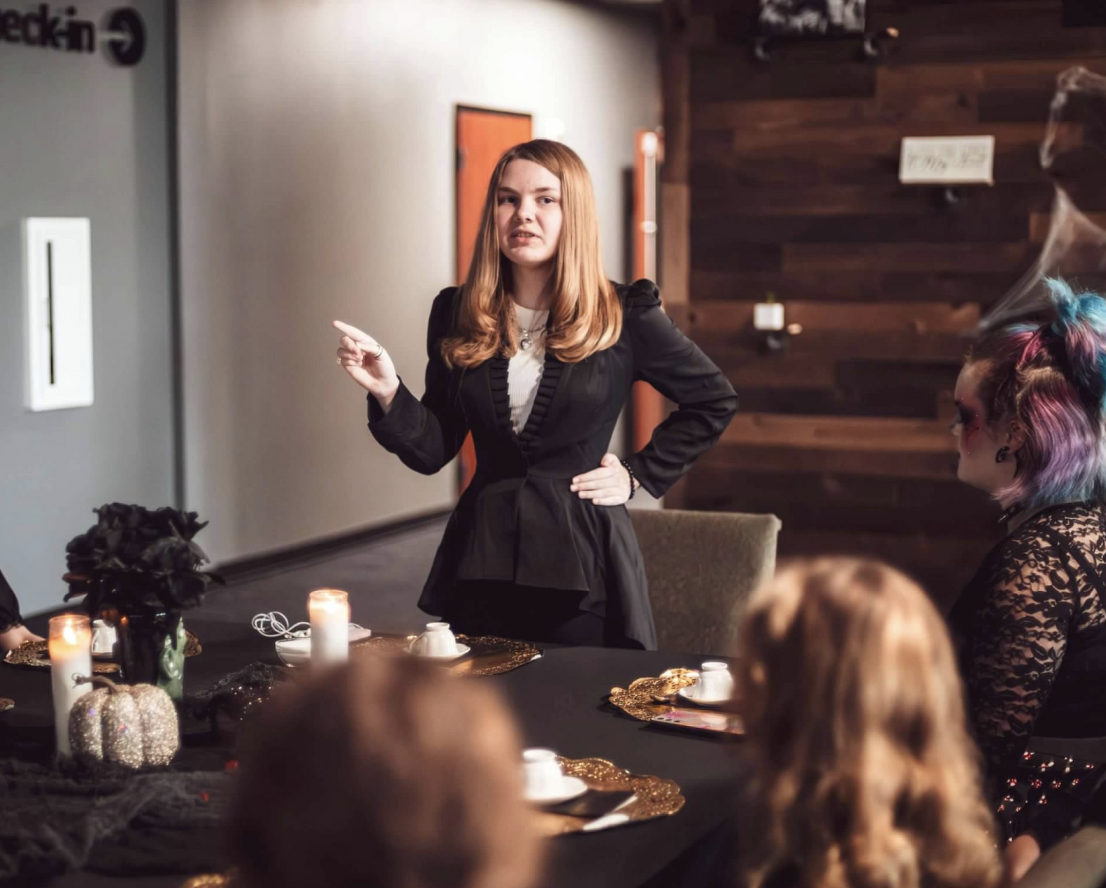
Building the Next Generation of Leaders
When we invest in teaching young girls leadership skills like project management, planning, critical thinking, and teamwork, we aren’t just preparing them for success — we’re preparing them to change the world.
When we invest in teaching young girls leadership skills like project management, planning, critical thinking, and teamwork, we aren’t just preparing them for success — we’re preparing them to change the world.
Why Start Early?
Girls are natural leaders. They’re full of ideas, energy, and heart. But without early experiences that allow them to practice real-world skills, that natural leadership potential can fade into the background.
By introducing leadership, project management, and planning skills early, we help girls:
✨ Develop confidence in their abilities
✨ Learn how to organize ideas into action
✨ Communicate effectively and advocate for themselves and others
✨ Turn vision into reality, step by step
Early leadership experiences create a foundation for lifelong success — not just in careers, but in relationships, communities, and self-advocacy.
Why We Teach Leadership
Through our programs, including our Emerald Leadership Programs, girls are guided through hands-on experiences that cover:
Goal Setting: How to dream big — and set achievable steps to get there.
Project Management: Breaking big ideas into tasks, setting timelines, assigning roles, and managing resources.
Team Leadership: How to inspire others, delegate responsibility, and build a culture of collaboration.
Critical Thinking and Problem Solving: Learning to navigate challenges creatively and with resilience.
Planning and Organization: Skills like creating schedules, budgeting time and money, and adapting plans as needed.
These are the same skills Fortune 500 CEOs, tech innovators, and global changemakers use every day — and our girls are learning them now.
More Than Just a Skillset
Teaching leadership isn't just about skills. It’s about mindset.
Girls learn that they don’t have to wait for permission.
They don’t have to have all the answers before they start.
They don't have to fit into an outdated mold of what leadership looks like.
By doing this, you can empower girls to lead with heart, authenticity, creativity — and a little rebellious spirit.
The Future is Fearless
Imagine a world where girls grow up believing their ideas matter. Where they are given tools to make things happen. Where leadership is seen as courage plus action — not just authority or title.
That’s the fearless future we believe in.
Because when girls learn to lead, they don’t just change their own lives. They change the world.

Supporting Girls as They Discover Who They Are
It’s during childhood and adolescence that girls explore not just their passions and dreams, but also their identities, boundaries, and values — shaping who they are and how they show up in the world.
Today, supporting girls means embracing the full spectrum of who they are becoming, including their exploration of gender identity, personal boundaries, and self-expression.
The journey of self-discovery is sacred.
It’s during childhood and especially adolescence that girls explore not just their passions and dreams, but also their identities, boundaries, and values — shaping who they are and how they show up in the world.
Today, supporting girls means embracing the full spectrum of who they are becoming, including their exploration of gender identity, personal boundaries, and self-expression. But we don’t often seen this taught in school or even home and we get it, as adults we want our vision and often forget that our children’s lives, while influenced by the experiences we give them are in the end….theirs to discover.
Identity Development: A Natural (and Necessary) Journey
Self-discovery is a critical part of growing up.
According to research published by the American Psychological Association (APA), adolescence is a key period for developing a sense of identity — including understanding gender roles, questioning societal expectations, and forming a stable sense of self.
(Source: APA, Developing Adolescents: A Reference for Professionals, 2002)
During this time, girls (and those who identify with the girl experience) are:
Exploring gender identity and gender expression
Testing boundaries and seeking independence
Learning to advocate for their physical and emotional boundaries
Defining their values and beliefs
Our role isn’t to define who they should be — it’s to create spaces where they can explore safely, authentically, and without judgment.
Supporting Gender Identity Exploration
Gender identity — a person’s internal sense of being female, male, both, neither, or somewhere along the gender spectrum — often becomes more consciously explored during adolescence.
According to a 2022 survey from the Trevor Project, about 25% of LGBTQ+ youth identify as nonbinary or gender-expansive.
(Source: The Trevor Project, 2022 National Survey on LGBTQ Youth Mental Health)
Affirmation matters. Research consistently shows that when young people are affirmed in their gender identity and expression, they experience:
Lower rates of depression and anxiety
Improved self-esteem
Stronger resilience and mental health outcomes
(Source: Journal of Adolescent Health, 2021)
At Magical Rebel, we affirm every girl — cisgender, transgender, or nonbinary — on their journey of self-discovery.
Everyone deserves to be celebrated for who they know themselves to be.
Teaching Healthy Boundaries
Discovering identity also means discovering boundaries.
Girls need skills to set, communicate, and enforce boundaries — from emotional limits in friendships to physical autonomy and consent.
According to the National Sexual Violence Resource Center (NSVRC), early education around personal boundaries leads to:
Stronger interpersonal relationships
Reduced vulnerability to abuse
Greater self-respect and respect for others' boundaries
(Source: NSVRC, Preventing Child Sexual Abuse: Boundaries and Consent Education)
In our programs, girls practice:
Saying “no” with confidence
Recognizing when their boundaries are being crossed
Respecting others' limits
Trusting their intuition
Creating safe, affirming spaces for self-exploration
Respecting and uplifting every girl's gender identity and expression
Teaching boundary-setting as a vital leadership skill
Celebrating individuality and authenticity
These are lifelong skills for leadership, wellness, and empowerment.
Because discovering who you are — and standing proudly in that truth — is the ultimate act of rebellion against a world that tries to limit you.
We don’t just want girls to find themselves. We want them to fall in love with who they are becoming.
🌟 Magical Rebel: Rebel Hearts. Fearless Futures. 🌟

When Girls Begin to Feel Invisible — And Why It Matters
Multiple studies have found that around age 8, girls’ confidence levels begin to dip — and by the time they reach middle school (ages 11-13), many girls experience a sharp decline in self-esteem compared to boys.
Research shows a troubling pattern: many girls begin to feel invisible by late elementary and middle school — a critical time when their confidence, self-perception, and leadership potential are forming.
Understanding when and why this happens is essential if we want to change the story.
The Age When Confidence Starts to Drop
Multiple studies have found that around age 8, girls’ confidence levels begin to dip — and by the time they reach middle school (ages 11-13), many girls experience a sharp decline in self-esteem compared to boys.
A 2018 survey by Ypulse and the Confidence Code for Girls authors (Katty Kay and Claire Shipman) found that girls’ confidence drops by 30% between ages 8 and 14.
(Source: Confidence Code for Girls, Katty Kay & Claire Shipman, 2018)A study published in the Journal of Adolescence noted that during early adolescence, girls report feeling less competent, less comfortable taking risks, and less seen by teachers, peers, and adults compared to boys.
(Source: Journal of Adolescence, Vol. 27, Issue 5, 2004)
This means by middle school, many girls begin to silence themselves — questioning their ideas, hesitating to lead, and shrinking back from visibility at the exact time they should be stepping into their power.
Why Does This Happen?
The reasons are layered, but some key contributors include:
Socialization and Gender Expectations: Girls are often praised for being "nice," "quiet," and "agreeable," while boys are praised for being "bold" and "assertive."
Media Representation: Girls see fewer examples of women in leadership roles, adventure stories, or fields like STEM, reinforcing narrow ideas of what they can become.
Fear of Judgment: As girls grow, they become more aware of how they are perceived. They often internalize societal pressure to "fit in" and avoid standing out.
Academic and Social Environments: Even well-meaning adults can unintentionally send signals that girls should defer, be modest, or prioritize likability over leadership.
The Cost of Invisibility
When girls feel invisible, the consequences are profound:
They are less likely to raise their hands in class.
They are less likely to pursue leadership opportunities.
They second-guess their talents and ideas.
They hesitate to take risks — essential for innovation, leadership, and self-discovery.
A study by the American Association of University Women (AAUW) highlights that early losses in confidence can translate into fewer girls pursuing leadership tracks in school, fewer women in top positions, and an enduring gender gap in many fields.
(Source: "Where the Girls Are: The Facts About Gender Equity in Education," AAUW, 2008)
It’s Time to Fight Back
We must refuse to let girls disappear into the background.
It’s time to create spaces where girls are:
Encouraged to be bold and visible.
Taught to project manage their dreams into action.
Connected with mentors who model diverse, authentic leadership.
Empowered to lead with courage, resilience, and heart.
We don’t tell girls to be smaller, quieter, or less daring.
We tell them the world needs more of exactly who they are.
Moving Forward: A Call to Action
If we want fearless futures, we have to make sure girls feel seen, heard, and celebrated — especially during those crucial years between 8 and 14.
🌟 Stay visible. Stay powerful. Stay rebellious. 🌟
Sources:
Katty Kay & Claire Shipman. The Confidence Code for Girls, 2018.
"Where the Girls Are: The Facts About Gender Equity in Education," American Association of University Women (AAUW), 2008.
Pomerantz, E. M., Altermatt, E. R., & Saxon, J. L. (2002). "Making the Grade but Feeling Distressed: Gender Differences in Academic Performance and Internal Distress." Journal of Adolescence, Vol. 27, Issue 5.

Rebel Hearts. Fearless Futures.
At Magical Rebel, we believe in the untamed power of those who dare to imagine something different — something better. Our mantra, "Rebel Hearts. Fearless Futures.", is more than just words. It’s a movement. A call to the dreamers, the builders, the bold-hearted leaders who aren’t waiting for permission to change the world — they’re already doing it.

Do you believe in the untamed power of those who dare to imagine something different — something better? Our mantra, "Rebel Hearts. Fearless Futures.", is more than just words. It’s a movement. A call to the dreamers, the builders, the bold-hearted leaders who aren’t waiting for permission to change the world — they’re already doing it.
We were founded with a simple but profound belief: those with rebel hearts shape the future. Not the ones who stay quiet. Not the ones who play it safe. But the ones who challenge, who question, who imagine new paths when old ones no longer serve. Magical Rebel exists to equip these leaders — no matter their age, background, or starting line — with the tools, confidence, and community to create a fearless future.
The Power of the Magical Rebel Leadership Programs
At the core of our work lies the Magical Rebel Leadership Programs, a series of leadership journeys designed to ignite courage, creativity, and change. Each Emerald experience is rooted in our signature approach:
✨ Lead with vision.
✨ Act with heart.
✨ Build with grit.
Our programs blend mentorship, skill-building, and real-world opportunities, giving participants the chance to not only dream but do. Whether it’s through entrepreneurship training, advocacy projects, or creative innovation labs, we empower our Rebels to step fully into their power — on their terms.
Magical Rebels are thinkers, makers, movers, and catalysts. They don’t accept the status quo. They rewrite it.
Why Rebel Hearts Matter
Why do we center rebellion in a world that often rewards conformity? Because rebellion is the birthplace of progress. Every major change — every leap forward in human rights, innovation, and leadership — began with someone who refused to accept "this is just the way it is."
Rebel hearts are courageous enough to imagine what could be — and fearless enough to make it happen.
That’s who we are at Magical Rebel. That's who we nurture through our Emerald Leadership Program. And that's the future we're building, one fearless leader at a time.
Join the Movement
If you’ve ever been told you're "too much," "too ambitious," "too different," or "too passionate",,,,, good.
You're exactly who the future needs.
It’s time to unleash your rebel heart. It’s time to forge a fearless future.
Learn more about Magical Rebel and the Emerald Leadership Program — and discover how you can be part of a revolution rooted in magic, courage, and unstoppable change.
🌟 Rebel Hearts. Fearless Futures. Only at Magical Rebel. 🌟