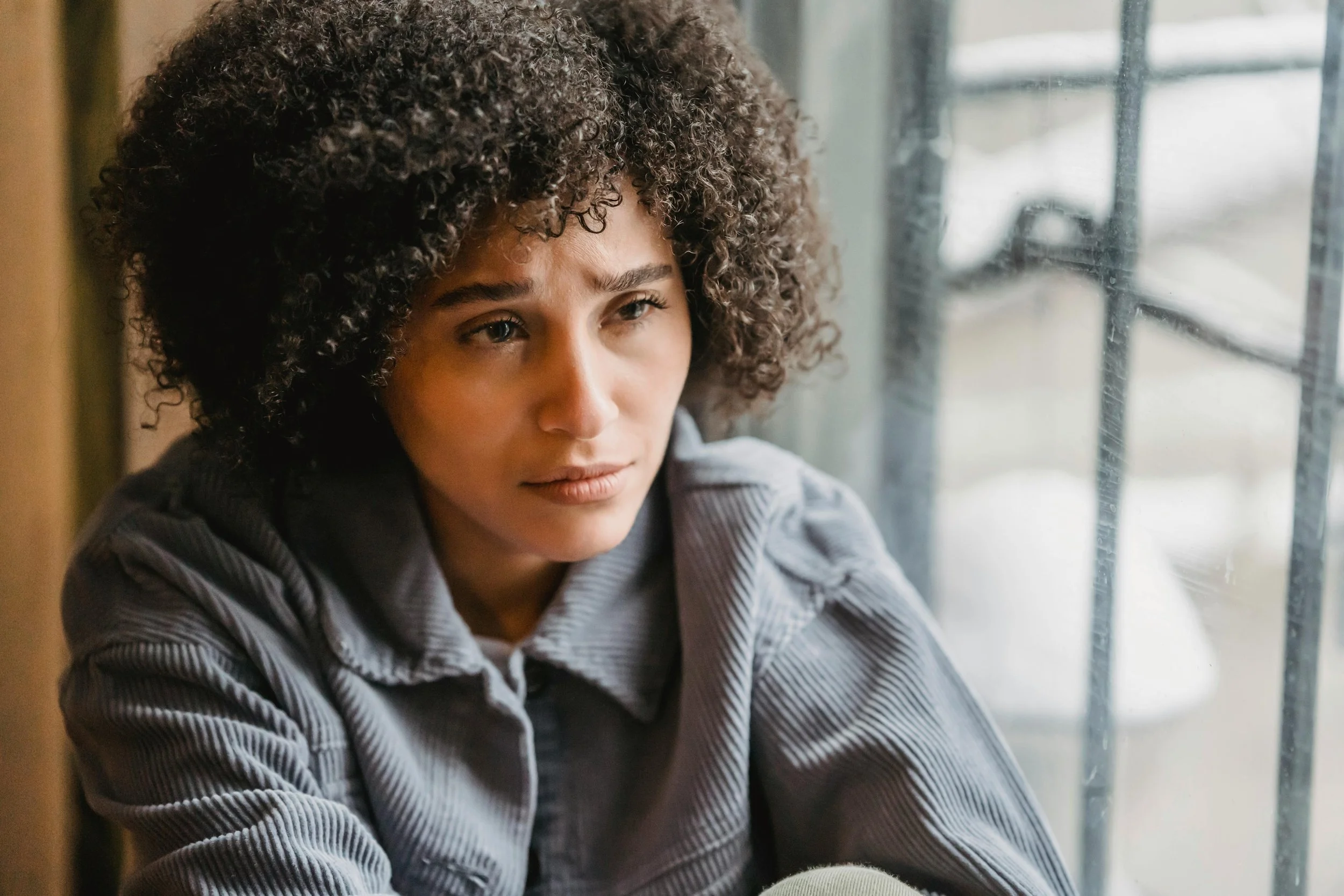
Emotional Safety vs. Emotional Comfort: Why We Often Get It Wrong
Emotional safety and emotional comfort are often confused—but they lead to very different outcomes for young people. This post explores why avoiding discomfort can limit growth, and how creating emotionally safe spaces allows youth to express themselves, navigate challenges, and build confidence and identity in a meaningful way.
There’s a phrase we hear often when working with youth:
“I just want them to feel comfortable.”
It sounds supportive. Protective, even. But there’s an important distinction that often gets missed—one that changes how we show up as parents, mentors, and leaders:
Emotional safety and emotional comfort are not the same thing.
And confusing the two can unintentionally limit growth.
What Is Emotional Comfort?
Emotional comfort is about ease.
It looks like:
Avoiding difficult conversations
Staying in familiar situations
Not feeling challenged or stretched
Keeping things “nice” and predictable
Comfort feels good. It reduces tension. It creates short-term peace.
But it also keeps things exactly as they are.
What Is Emotional Safety?
Emotional safety is different.
It’s not about avoiding discomfort, it’s about creating an environment where someone can experience discomfort without fear of rejection, shame, or harm.
Emotional safety sounds like:
“You can share what you’re feeling here.”
“It’s okay to not have this figured out.”
“You don’t have to agree with me to be respected.”
It creates space for:
Honest expression
Questions
Mistakes
Growth
Why This Distinction Matters for Youth
Young people are constantly navigating new experiences:
Identity development
Social dynamics
Emotional highs and lows
Exposure to new ideas and perspectives
Growth, by nature, is uncomfortable.
So if our goal is to keep them comfortable, we may unintentionally:
Shut down important conversations
Avoid topics that matter
Reinforce fear of discomfort
Limit their ability to build resilience
But if our goal is to create emotional safety, something different happens:
They learn they can handle discomfort and still be okay.
Where Adults Often Get Stuck
As adults, we want to protect.
So when something feels unfamiliar or challenging, our instinct is often to:
Step in quickly
Redirect the conversation
“Prepare” or control the situation
Reduce discomfort as fast as possible
But in doing so, we may be responding to our own discomfort, not the child’s.
This is especially true in conversations around identity, difference, or social change.
Sometimes, the young person is already navigating the experience with ease, until an adult introduces concern.
What Emotionally Safe Spaces Actually Look Like
An emotionally safe space is not one where:
Everyone agrees
Nothing uncomfortable is said
Differences are avoided
It is a space where:
People can show up as they are
Differences are respected, not feared
Questions are welcomed
Discomfort is allowed but supported
This is where real growth happens.
The Impact on Confidence and Identity
When young people feel emotionally safe, they:
Take more risks in expressing themselves
Build stronger self-awareness
Develop resilience
Form a more stable sense of identity
They learn: “I can feel uncomfortable and still be accepted.”
That belief is foundational.
Why This Matters for Magical Rebels
At Magical Rebels, we are not trying to create perfectly comfortable spaces.
We are creating emotionally safe ones.
Spaces where:
Identity can be explored without pressure
Conversations can be honest and evolving
No one has to shrink to fit in
Discomfort is part of growth, not something to avoid
For those who identify with the girl experience and lead a feminine lifestyle, this is especially important. Many have been taught to prioritize harmony over honesty, comfort over truth.
We are shifting that.
Final Thought
Comfort keeps things the same.
Safety allows things to grow.
And if we want young people to develop confidence, voice, and identity, we have to be willing to let them experience discomfort—within spaces where they know they are supported.
Because the goal isn’t to make everything easy.
It’s to make sure they are never alone in figuring it out.

The Spiritual Void and the Rise of Modern Witchcraft
As more young people seek meaning outside traditional belief systems, modern witchcraft has emerged as a powerful form of personal spirituality. This post explores the concept of the “spiritual void,” why it’s showing up for today’s youth, and how practices rooted in ritual, nature, and self-discovery are helping them reclaim agency, identity, and connection in a rapidly changing world.
Across generations, there are moments when people begin to feel a quiet but persistent absence—something missing beneath the routines, expectations, and structures of everyday life. This absence is often described as a spiritual void: a sense of disconnection from meaning, purpose, identity, or something larger than oneself.
For today’s youth especially, this feeling is becoming more visible.
They are growing up in a world that is highly connected digitally, yet often fragmented emotionally and spiritually. Traditional institutions, religious, cultural, and communal, no longer hold the same central role they once did for many families. At the same time, there is increased exposure to global perspectives, identities, and belief systems. The result is a generation that is both curious and untethered, seeking meaning, but not always finding it in conventional places.
This is where the conversation around modern witchcraft often emerges.
It’s important to understand that what is trending today under the label of “witchcraft” is not a single, uniform practice. For many, it is not about spells or supernatural power in the way media portrays it. Instead, it represents a broader movement toward personal spirituality, ritual, and self-defined belief systems.
So why is it resonating right now?
First, it offers agency.
In a world where many systems feel out of individual control, practices associated with witchcraft, journaling, intention-setting, working with cycles of the moon or seasons, give people a sense of participation in their own lives. It becomes less about being told what to believe and more about choosing what feels meaningful.
Second, it is deeply tied to nature and rhythm.
Many modern interpretations draw from seasonal cycles, earth-based traditions, and the idea that life moves in phases, growth, rest, release, renewal. For young people especially, this can feel grounding in contrast to the fast, constant pace of digital life. It reconnects them to something tangible and cyclical rather than linear and pressured.
Third, it creates space for identity exploration.
Spirituality, when approached outside rigid structures, allows individuals to ask: Who am I? What do I believe? What feels true to me? For youth navigating identity—whether gender, emotional, or social this openness can feel safer and more affirming than systems that prescribe answers.
Fourth, it fosters ritual and meaning-making.
Humans are wired for ritual. Even small, intentional acts- lighting a candle, setting a goal, reflecting on a phase of life can create a sense of significance and grounding. What some call “witchcraft” is often simply a structured way of creating those moments.
At the same time, it’s important to hold nuance, especially when guiding young people.
Not everything labeled as “witchcraft” online is rooted in understanding or respect for its origins. Some practices are borrowed, simplified, or commercialized in ways that disconnect them from their cultural or spiritual roots. This creates an opportunity for education: helping youth understand the difference between personal spiritual exploration and cultural appropriation or trend-driven behavior. We’ve done a deeper dive in our private youth coaching group about this because it is so important.
The goal is not to steer young people toward or away from any specific belief system.
The goal is to help them develop awareness.
To understand that:
People choose beliefs for different reasons: community, tradition, identity, healing, or meaning
Spirituality can take many forms, from structured religion to personal practice
It is okay to explore, question, and evolve
Respect for others’ beliefs and for the origins of practices is essential
In spaces like Magical Rebels, these conversations are not about defining what is “right.” They are about creating room for thoughtful exploration.
Because the presence of a spiritual void is not inherently negative.
It is often the beginning of a search.
And for many, what looks like a trend, like the rise of witchcraft, is actually a reflection of something deeper: a desire to reconnect, understand, and find meaning in a world that doesn’t always offer clear answers.
When we meet that curiosity with openness instead of fear, we give young people something far more powerful than answers.
We give them the tools to ask their own questions, and the confidence to explore what comes next.
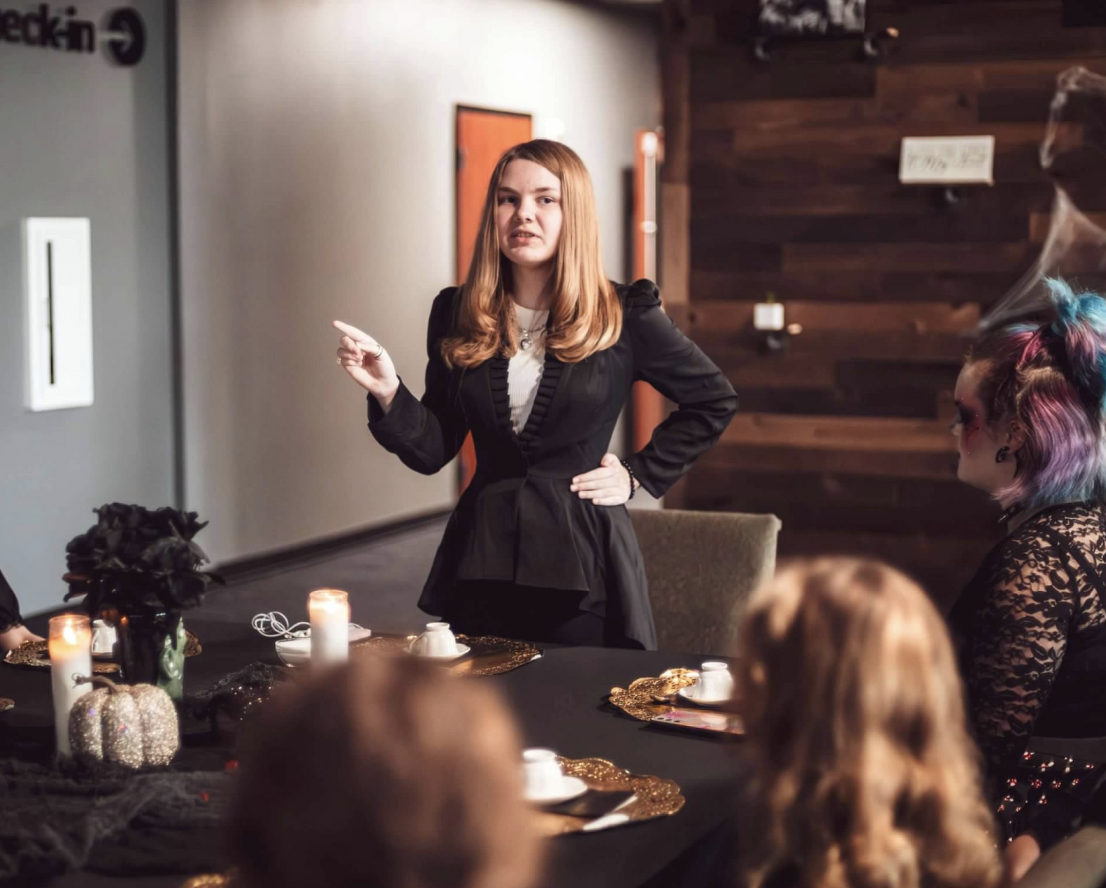
Building the Next Generation of Leaders
When we invest in teaching young girls leadership skills like project management, planning, critical thinking, and teamwork, we aren’t just preparing them for success — we’re preparing them to change the world.
When we invest in teaching young girls leadership skills like project management, planning, critical thinking, and teamwork, we aren’t just preparing them for success — we’re preparing them to change the world.
Why Start Early?
Girls are natural leaders. They’re full of ideas, energy, and heart. But without early experiences that allow them to practice real-world skills, that natural leadership potential can fade into the background.
By introducing leadership, project management, and planning skills early, we help girls:
✨ Develop confidence in their abilities
✨ Learn how to organize ideas into action
✨ Communicate effectively and advocate for themselves and others
✨ Turn vision into reality, step by step
Early leadership experiences create a foundation for lifelong success — not just in careers, but in relationships, communities, and self-advocacy.
Why We Teach Leadership
Through our programs, including our Emerald Leadership Programs, girls are guided through hands-on experiences that cover:
Goal Setting: How to dream big — and set achievable steps to get there.
Project Management: Breaking big ideas into tasks, setting timelines, assigning roles, and managing resources.
Team Leadership: How to inspire others, delegate responsibility, and build a culture of collaboration.
Critical Thinking and Problem Solving: Learning to navigate challenges creatively and with resilience.
Planning and Organization: Skills like creating schedules, budgeting time and money, and adapting plans as needed.
These are the same skills Fortune 500 CEOs, tech innovators, and global changemakers use every day — and our girls are learning them now.
More Than Just a Skillset
Teaching leadership isn't just about skills. It’s about mindset.
Girls learn that they don’t have to wait for permission.
They don’t have to have all the answers before they start.
They don't have to fit into an outdated mold of what leadership looks like.
By doing this, you can empower girls to lead with heart, authenticity, creativity — and a little rebellious spirit.
The Future is Fearless
Imagine a world where girls grow up believing their ideas matter. Where they are given tools to make things happen. Where leadership is seen as courage plus action — not just authority or title.
That’s the fearless future we believe in.
Because when girls learn to lead, they don’t just change their own lives. They change the world.