
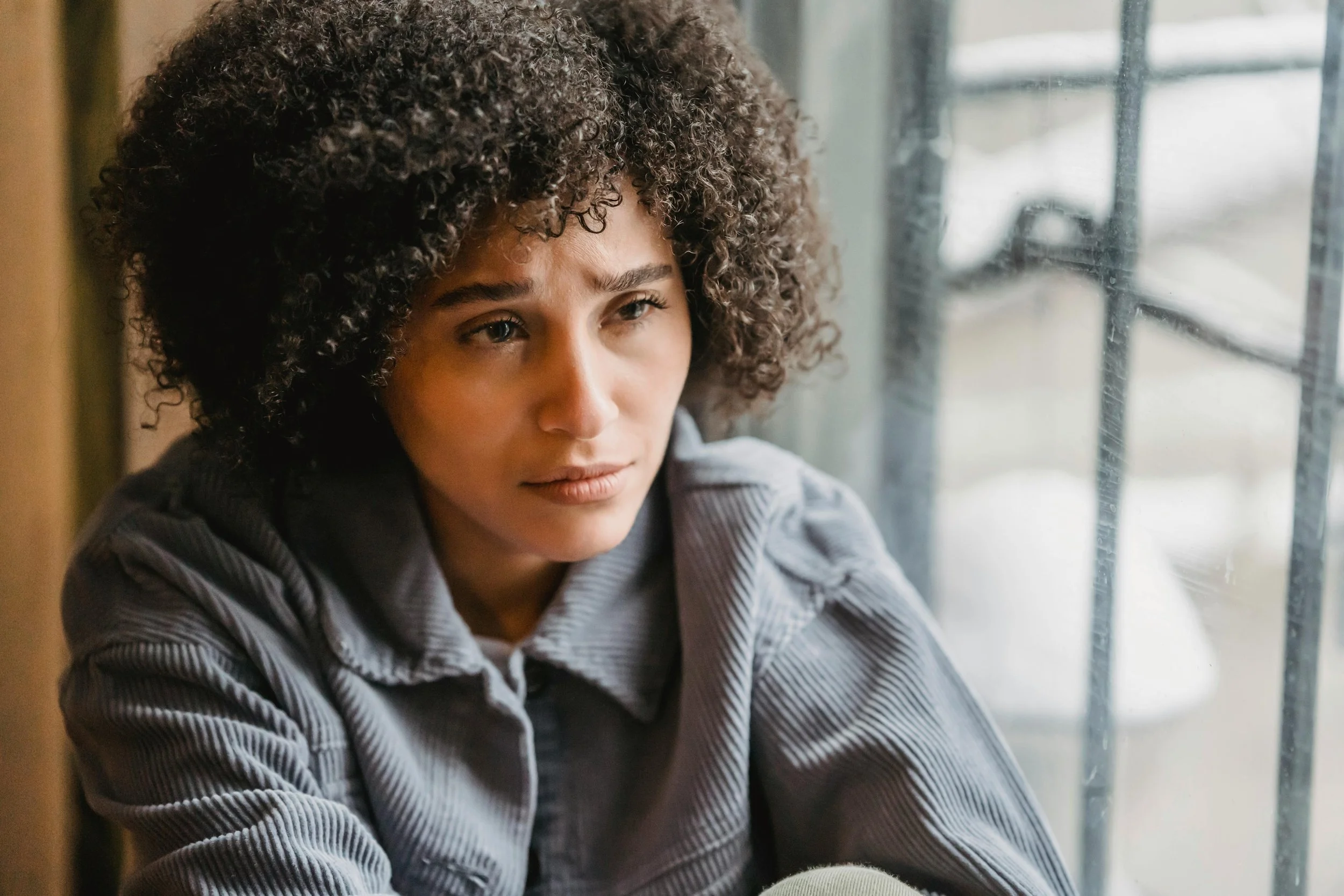
Emotional Safety vs. Emotional Comfort: Why We Often Get It Wrong
Emotional safety and emotional comfort are often confused—but they lead to very different outcomes for young people. This post explores why avoiding discomfort can limit growth, and how creating emotionally safe spaces allows youth to express themselves, navigate challenges, and build confidence and identity in a meaningful way.
There’s a phrase we hear often when working with youth:
“I just want them to feel comfortable.”
It sounds supportive. Protective, even. But there’s an important distinction that often gets missed—one that changes how we show up as parents, mentors, and leaders:
Emotional safety and emotional comfort are not the same thing.
And confusing the two can unintentionally limit growth.
What Is Emotional Comfort?
Emotional comfort is about ease.
It looks like:
Avoiding difficult conversations
Staying in familiar situations
Not feeling challenged or stretched
Keeping things “nice” and predictable
Comfort feels good. It reduces tension. It creates short-term peace.
But it also keeps things exactly as they are.
What Is Emotional Safety?
Emotional safety is different.
It’s not about avoiding discomfort, it’s about creating an environment where someone can experience discomfort without fear of rejection, shame, or harm.
Emotional safety sounds like:
“You can share what you’re feeling here.”
“It’s okay to not have this figured out.”
“You don’t have to agree with me to be respected.”
It creates space for:
Honest expression
Questions
Mistakes
Growth
Why This Distinction Matters for Youth
Young people are constantly navigating new experiences:
Identity development
Social dynamics
Emotional highs and lows
Exposure to new ideas and perspectives
Growth, by nature, is uncomfortable.
So if our goal is to keep them comfortable, we may unintentionally:
Shut down important conversations
Avoid topics that matter
Reinforce fear of discomfort
Limit their ability to build resilience
But if our goal is to create emotional safety, something different happens:
They learn they can handle discomfort and still be okay.
Where Adults Often Get Stuck
As adults, we want to protect.
So when something feels unfamiliar or challenging, our instinct is often to:
Step in quickly
Redirect the conversation
“Prepare” or control the situation
Reduce discomfort as fast as possible
But in doing so, we may be responding to our own discomfort, not the child’s.
This is especially true in conversations around identity, difference, or social change.
Sometimes, the young person is already navigating the experience with ease, until an adult introduces concern.
What Emotionally Safe Spaces Actually Look Like
An emotionally safe space is not one where:
Everyone agrees
Nothing uncomfortable is said
Differences are avoided
It is a space where:
People can show up as they are
Differences are respected, not feared
Questions are welcomed
Discomfort is allowed but supported
This is where real growth happens.
The Impact on Confidence and Identity
When young people feel emotionally safe, they:
Take more risks in expressing themselves
Build stronger self-awareness
Develop resilience
Form a more stable sense of identity
They learn: “I can feel uncomfortable and still be accepted.”
That belief is foundational.
Why This Matters for Magical Rebels
At Magical Rebels, we are not trying to create perfectly comfortable spaces.
We are creating emotionally safe ones.
Spaces where:
Identity can be explored without pressure
Conversations can be honest and evolving
No one has to shrink to fit in
Discomfort is part of growth, not something to avoid
For those who identify with the girl experience and lead a feminine lifestyle, this is especially important. Many have been taught to prioritize harmony over honesty, comfort over truth.
We are shifting that.
Final Thought
Comfort keeps things the same.
Safety allows things to grow.
And if we want young people to develop confidence, voice, and identity, we have to be willing to let them experience discomfort—within spaces where they know they are supported.
Because the goal isn’t to make everything easy.
It’s to make sure they are never alone in figuring it out.
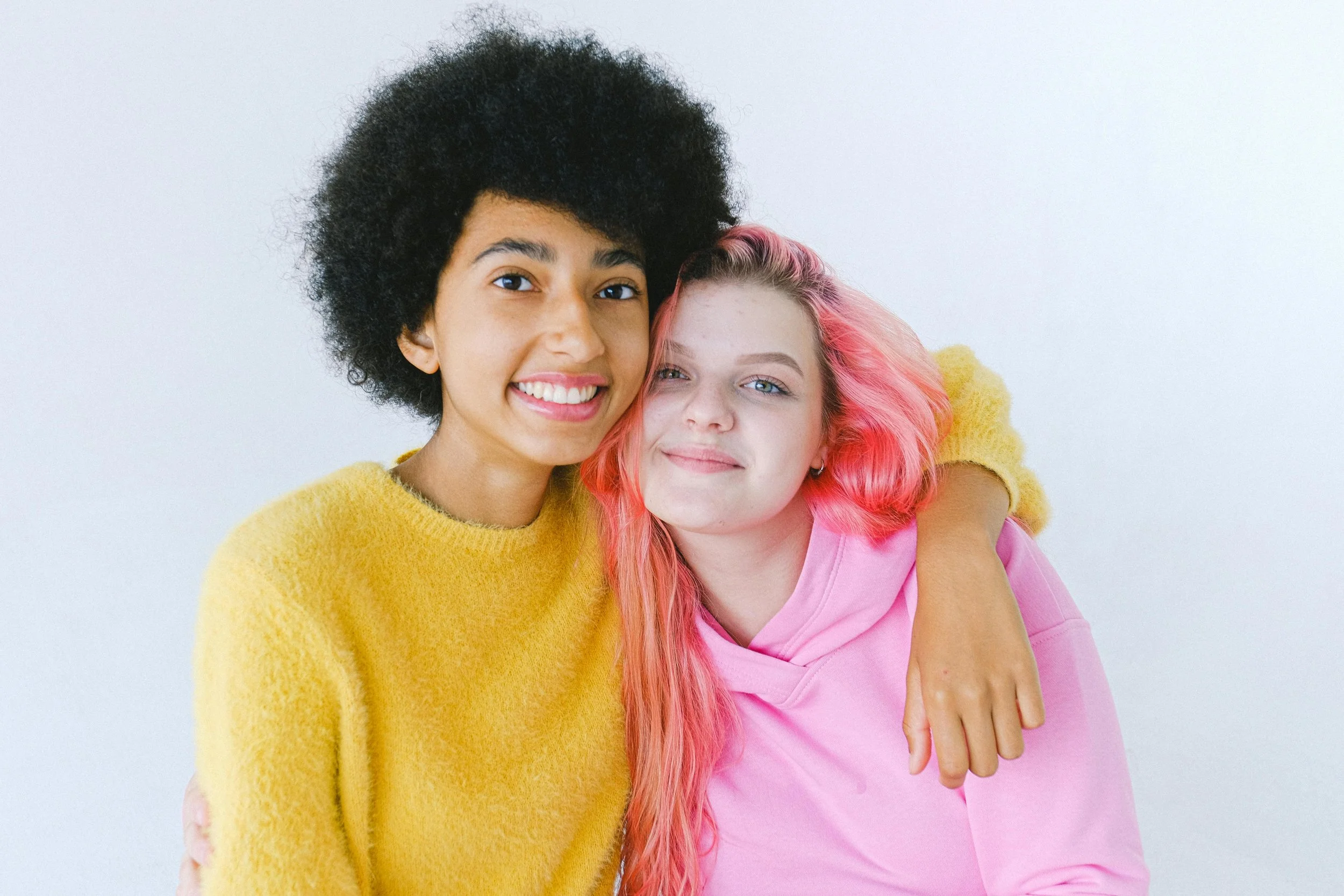
Why Belonging Matters More Than Confidence
Confidence is often seen as the goal for young people—but it actually grows from something deeper: belonging. This post explores why feeling safe, accepted, and able to be yourself is the true foundation for confidence, and how creating spaces of belonging allows youth to find their voice, identity, and leadership.
We hear it all the time:
“I just want my child to be confident.”
Confidence has become the goal. The marker of success. The thing we believe will help young people navigate the world, speak up, and stand strong in who they are.
But what if confidence isn’t the starting point?
What if it’s the result of something deeper?
Confidence Isn’t Built First
Confidence is often treated like something we can teach directly:
Speak up
Be brave
Believe in yourself
But for many young people, especially those still forming their identity, these messages can feel out of reach.
Because confidence doesn’t develop in isolation.
It develops in response to an environment.
And the most important condition in that environment is:
Belonging.
What Belonging Actually Means
Belonging is not just being included.
It is the feeling of:
Being accepted as you are
Not needing to change to fit in
Feeling safe to express yourself
Knowing you won’t be rejected for who you are
It is both emotional and psychological safety.
And for youth, especially those navigating identity, difference, or uncertainty, this matters more than anything else.
What Happens Without Belonging
When a young person does not feel like they belong, they don’t become confident.
They adapt.
They:
Shrink to fit expectations
Mask parts of themselves
Stay quiet to avoid judgment
Seek approval instead of trusting themselves
From the outside, this can look like:
Shyness
Disengagement
People-pleasing
“Lack of confidence”
But underneath, it’s not a confidence issue.
It’s a belonging issue.
What Happens When Belonging Comes First
When a young person feels like they belong, everything shifts.
They begin to:
Speak more freely
Take social and emotional risks
Try new things without fear of failure
Express opinions and ideas
Confidence emerges, not because it was forced, but because it was safe to develop.
This is why in environments where youth feel deeply accepted, you often see:
Stronger voices
Deeper connections
Higher engagement
More authentic leadership
Why This Matters Right Now
Today’s youth are navigating:
Social comparison
Identity exploration
Increased awareness of differences
Fear of being judged or excluded
In this environment, telling them to “just be confident” misses the mark.
Because what they are really asking is:
“Is it safe for me to be myself here?”
If the answer is no…or even unclear…confidence will not follow.
The Role of Adults and Spaces
Belonging is not something young people create alone.
It is something that is built around them.
Adults, mentors, and communities set the tone.
We create belonging when we:
Normalize differences instead of highlighting them
Avoid labeling or singling out identities
Model respect and openness
Create environments where no one has to “earn” their place
This is especially important in inclusive spaces.
Belonging does not require explanation.
It requires intentional culture.
Why This Matters for Magical Rebels
At Magical Rebels, belonging is not a side effect.
It is the foundation.
This is a space for those who identify with the girl experience and lead a feminine lifestyle—across identities, expressions, and backgrounds.
No one is asked to explain who they are.
No one is singled out.
No one has to prove they belong.
Because when belonging is established:
Voice follows.
Confidence grows.
Leadership emerges.
Final Thought
Confidence is not the first step.
Belonging is.
And when people feel like they are truly seen, accepted, and safe to be who they are, something powerful happens:
They don’t just become confident.
They become themselves.

The Magic of the In-Between: Why Growth Feels Uncomfortable
The space between who you were and who you’re becoming can feel uncertain, uncomfortable, and even overwhelming. but it’s also where real growth happens. This post explores why the “in-between” is a natural and necessary part of identity development, and how embracing this phase can help young people build confidence, clarity, and trust in themselves.
There is a space we don’t talk about enough.
It’s the space between who you were and who you’re becoming.
The space where nothing feels fully certain, but everything is shifting.
It’s uncomfortable.
It’s unclear.
And for many young people, it feels like something is wrong.
But this space….the in-between….is where the real work of growth happens.
Why the In-Between Feels So Hard
We live in a world that celebrates clarity.
We celebrate:
Confidence
Identity
Success
Knowing who you are
But we rarely talk about the process it takes to get there.
For youth and young adults especially, this creates pressure:
Figure it out quickly
Pick who you are
Be sure of yourself
When they can’t do that (which is completely normal), they often internalize it as failure.
But the truth is:
Uncertainty is not a problem to fix. It is a phase to move through.
What’s Actually Happening Beneath the Surface
During times of transition, the brain and emotional system are actively reorganizing.
Young people are:
Letting go of old identities
Trying on new ones
Reevaluating beliefs
Testing boundaries
Building independence
This is not linear. It is layered, messy, and often contradictory.
One day they feel confident.
The next day they feel unsure.
That doesn’t mean they’re lost.
It means they are becoming.
The Cultural Pressure to Skip the Middle
One of the biggest challenges young people and the neurodiverse face is the expectation to move through this phase quickly.
Social media amplifies this:
Everyone seems sure
Everyone seems confident
Everyone seems “fully formed”
But what they don’t see is the in-between behind those moments.
So they begin to believe:
I’m the only one who feels this way
I should have this figured out by now
This is where anxiety and self-doubt start to take hold.
Not because they’re doing something wrong, but because they’re trying to rush a process that cannot be rushed.
Nature Doesn’t Rush and Neither Should We
If you look at nature, everything moves in cycles.
There are seasons of:
Growth
Rest
Release
Renewal
Nothing blooms all year.
Nothing transforms overnight.
The in-between seasons, like early spring or late autumn—are quiet, uncertain, and often overlooked. But they are essential. They are where preparation and transformation happen beneath the surface.
Young people are no different.
They are not meant to always be in a state of clarity or confidence.
They are meant to move through cycles.
What Young People and the Neurodiverse Actually Need in This Space
They don’t need to be rushed.
They don’t need to be told who they are.
They need:
Permission to not have it all figured out
Language to understand what they’re experiencing
Space to explore without pressure
Support that doesn’t try to control the outcome
When we remove urgency, something powerful happens:
They begin to trust themselves.
The Role of Adults and Mentors
This is often the hardest part.
Adults want to help.
They want to guide, fix, and support.
But in the in-between, the most impactful thing we can do is hold space instead of rushing resolution.
That looks like:
Listening without immediately correcting
Asking questions instead of giving answers
Normalizing uncertainty
Resisting the urge to label or define too quickly
Because the moment we rush them out of the in-between, we interrupt the very process that builds confidence and identity.
Why This Matters for Magical Rebels
At Magical Rebels, we don’t see the in-between as something to move through quickly.
We see it as something to honor.
This is where:
Voice is discovered
Identity is shaped
Inner trust is built
For those who identify with the girl experience and lead a feminine lifestyle, this is especially important. Many have been taught to seek certainty outside of themselves—to look for validation, direction, or approval.
The in-between invites something different:
Coming back to yourself.
Final Thought
Growth does not happen in the moments where everything feels clear.
It happens in the moments where you’re unsure, questioning, and shifting.
The in-between is not a sign that you are lost.
It is a sign that something new is forming.
And if we can learn to sit in that space, without rushing, without fear, we begin to understand:
There is nothing wrong with becoming.
It was always meant to feel this way.
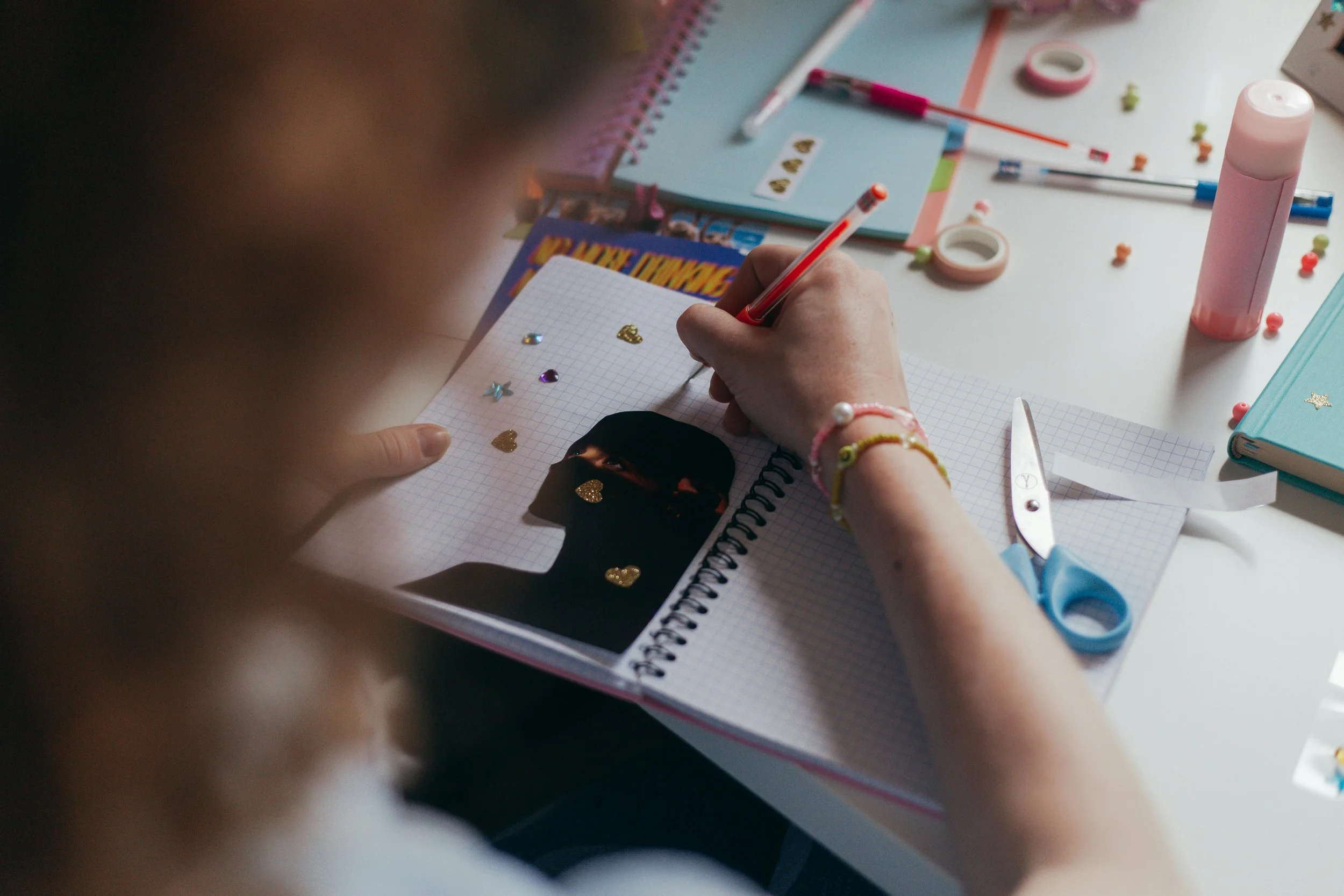
The Power of Journaling: Creating Space to Hear Yourself
Journaling is more than just writing—it’s a powerful tool for self-discovery, emotional regulation, and identity development. In a world filled with constant noise and pressure, journaling creates a private space for young people to process their thoughts, understand their emotions, and reconnect with their inner voice.
In a world that is constantly asking young people to perform, respond, and keep up, there are very few spaces where they are simply allowed to pause and process.
Journaling is one of those spaces.
It is simple. Accessible. Often underestimated.
And yet, it is one of the most powerful tools for self-discovery, emotional regulation, and identity development, especially for youth and young adults.
Why Journaling Matters More Than Ever
Today’s youth are navigating a complex internal and external world:
Constant digital input
Social comparison
Identity exploration
Emotional highs and lows without always having language for them
What journaling offers is something rare:
A private, judgment-free space to make sense of it all.
No audience.
No algorithm.
No expectation to perform.
Just thought → reflection → understanding.
What Actually Happens When You Journal
Journaling is not just “writing things down.” It activates deeper cognitive and emotional processes.
1. It organizes thoughts
When everything feels overwhelming or scattered, writing forces thoughts into structure. What felt chaotic begins to make sense.
2. It builds self-awareness
Patterns emerge. Emotions become clearer.
You begin to notice:
What triggers you
What excites you
What matters to you
3. It regulates emotions
Instead of holding everything internally, journaling creates a release point. This reduces stress and helps process feelings in a safe way.
4. It strengthens identity
Over time, journaling helps answer foundational questions:
Who am I?
What do I believe?
What do I want?
This is especially critical for youth navigating identity and belonging.
Why It’s So Powerful for Young People
For many youth, especially those who identify with the girl experience or lead with emotional awareness, there is often pressure to:
Be agreeable
Be liked
Say the “right” thing
Journaling removes that pressure.
It becomes a space where they can:
Be honest without consequence
Explore thoughts they’re not ready to say out loud
Try on ideas, beliefs, and identities safely
It gives them ownership over their inner world.
Journaling as a Form of Personal Power
When practiced consistently, journaling becomes more than reflection, it becomes agency.
It shifts a young person from:
Reacting → Reflecting
Absorbing → Choosing
Feeling lost → Finding clarity
It teaches them that their thoughts and feelings are not something to ignore or suppress—but something to listen to and learn from.
It Doesn’t Have to Look One Way
One of the biggest barriers to journaling is the belief that there is a “right way” to do it.
There isn’t.
Journaling can look like:
Bullet points
Stream-of-consciousness writing
Drawing or sketching
Lists, questions, or reflections
Voice notes (for those who struggle with writing)
For some, especially neurodiverse youth or those who feel pressure around writing, removing structure is what makes journaling accessible.
The goal is not perfection.
The goal is expression.
Simple Ways to Start
If you’re introducing journaling to youth (or starting yourself), keep it low-pressure:
“What am I feeling right now?”
“What stood out to me today?”
“What is something I’m trying to understand?”
“What do I need more of right now?”
Even a few sentences creates momentum.
Why This Matters for Magical Rebels
At Magical Rebels, journaling is not just an activity, it is a practice of returning to yourself.
It aligns with everything we stand for:
Finding your voice
Understanding your identity
Creating space for reflection
Leading from within
For those navigating identity, belonging, and growth, journaling becomes a quiet but powerful anchor.
Final Thought
Young people don’t need more noise.
They need more space to hear themselves.
Journaling creates that space.
And in that space, something important happens:
They begin to trust their own voice.

The Spiritual Void and the Rise of Modern Witchcraft
As more young people seek meaning outside traditional belief systems, modern witchcraft has emerged as a powerful form of personal spirituality. This post explores the concept of the “spiritual void,” why it’s showing up for today’s youth, and how practices rooted in ritual, nature, and self-discovery are helping them reclaim agency, identity, and connection in a rapidly changing world.
Across generations, there are moments when people begin to feel a quiet but persistent absence—something missing beneath the routines, expectations, and structures of everyday life. This absence is often described as a spiritual void: a sense of disconnection from meaning, purpose, identity, or something larger than oneself.
For today’s youth especially, this feeling is becoming more visible.
They are growing up in a world that is highly connected digitally, yet often fragmented emotionally and spiritually. Traditional institutions, religious, cultural, and communal, no longer hold the same central role they once did for many families. At the same time, there is increased exposure to global perspectives, identities, and belief systems. The result is a generation that is both curious and untethered, seeking meaning, but not always finding it in conventional places.
This is where the conversation around modern witchcraft often emerges.
It’s important to understand that what is trending today under the label of “witchcraft” is not a single, uniform practice. For many, it is not about spells or supernatural power in the way media portrays it. Instead, it represents a broader movement toward personal spirituality, ritual, and self-defined belief systems.
So why is it resonating right now?
First, it offers agency.
In a world where many systems feel out of individual control, practices associated with witchcraft, journaling, intention-setting, working with cycles of the moon or seasons, give people a sense of participation in their own lives. It becomes less about being told what to believe and more about choosing what feels meaningful.
Second, it is deeply tied to nature and rhythm.
Many modern interpretations draw from seasonal cycles, earth-based traditions, and the idea that life moves in phases, growth, rest, release, renewal. For young people especially, this can feel grounding in contrast to the fast, constant pace of digital life. It reconnects them to something tangible and cyclical rather than linear and pressured.
Third, it creates space for identity exploration.
Spirituality, when approached outside rigid structures, allows individuals to ask: Who am I? What do I believe? What feels true to me? For youth navigating identity—whether gender, emotional, or social this openness can feel safer and more affirming than systems that prescribe answers.
Fourth, it fosters ritual and meaning-making.
Humans are wired for ritual. Even small, intentional acts- lighting a candle, setting a goal, reflecting on a phase of life can create a sense of significance and grounding. What some call “witchcraft” is often simply a structured way of creating those moments.
At the same time, it’s important to hold nuance, especially when guiding young people.
Not everything labeled as “witchcraft” online is rooted in understanding or respect for its origins. Some practices are borrowed, simplified, or commercialized in ways that disconnect them from their cultural or spiritual roots. This creates an opportunity for education: helping youth understand the difference between personal spiritual exploration and cultural appropriation or trend-driven behavior. We’ve done a deeper dive in our private youth coaching group about this because it is so important.
The goal is not to steer young people toward or away from any specific belief system.
The goal is to help them develop awareness.
To understand that:
People choose beliefs for different reasons: community, tradition, identity, healing, or meaning
Spirituality can take many forms, from structured religion to personal practice
It is okay to explore, question, and evolve
Respect for others’ beliefs and for the origins of practices is essential
In spaces like Magical Rebels, these conversations are not about defining what is “right.” They are about creating room for thoughtful exploration.
Because the presence of a spiritual void is not inherently negative.
It is often the beginning of a search.
And for many, what looks like a trend, like the rise of witchcraft, is actually a reflection of something deeper: a desire to reconnect, understand, and find meaning in a world that doesn’t always offer clear answers.
When we meet that curiosity with openness instead of fear, we give young people something far more powerful than answers.
We give them the tools to ask their own questions, and the confidence to explore what comes next.
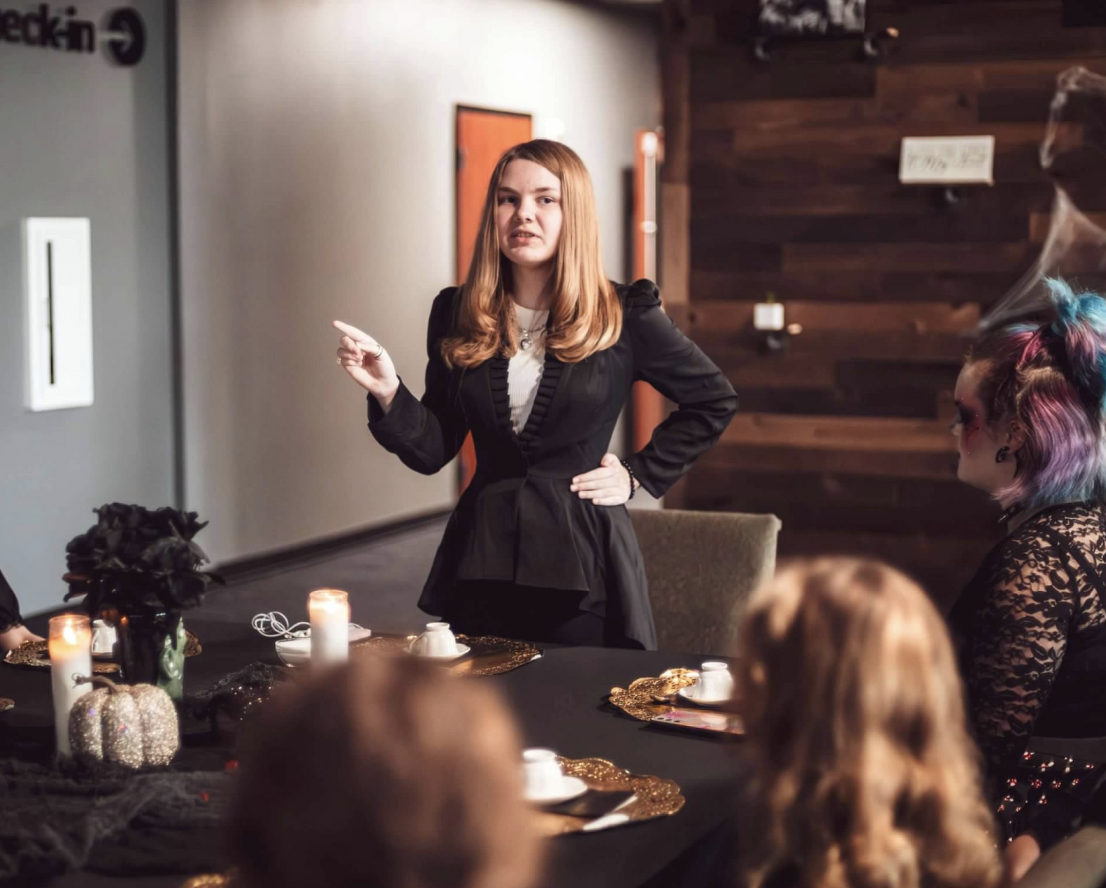
Building the Next Generation of Leaders
When we invest in teaching young girls leadership skills like project management, planning, critical thinking, and teamwork, we aren’t just preparing them for success — we’re preparing them to change the world.
When we invest in teaching young girls leadership skills like project management, planning, critical thinking, and teamwork, we aren’t just preparing them for success — we’re preparing them to change the world.
Why Start Early?
Girls are natural leaders. They’re full of ideas, energy, and heart. But without early experiences that allow them to practice real-world skills, that natural leadership potential can fade into the background.
By introducing leadership, project management, and planning skills early, we help girls:
✨ Develop confidence in their abilities
✨ Learn how to organize ideas into action
✨ Communicate effectively and advocate for themselves and others
✨ Turn vision into reality, step by step
Early leadership experiences create a foundation for lifelong success — not just in careers, but in relationships, communities, and self-advocacy.
Why We Teach Leadership
Through our programs, including our Emerald Leadership Programs, girls are guided through hands-on experiences that cover:
Goal Setting: How to dream big — and set achievable steps to get there.
Project Management: Breaking big ideas into tasks, setting timelines, assigning roles, and managing resources.
Team Leadership: How to inspire others, delegate responsibility, and build a culture of collaboration.
Critical Thinking and Problem Solving: Learning to navigate challenges creatively and with resilience.
Planning and Organization: Skills like creating schedules, budgeting time and money, and adapting plans as needed.
These are the same skills Fortune 500 CEOs, tech innovators, and global changemakers use every day — and our girls are learning them now.
More Than Just a Skillset
Teaching leadership isn't just about skills. It’s about mindset.
Girls learn that they don’t have to wait for permission.
They don’t have to have all the answers before they start.
They don't have to fit into an outdated mold of what leadership looks like.
By doing this, you can empower girls to lead with heart, authenticity, creativity — and a little rebellious spirit.
The Future is Fearless
Imagine a world where girls grow up believing their ideas matter. Where they are given tools to make things happen. Where leadership is seen as courage plus action — not just authority or title.
That’s the fearless future we believe in.
Because when girls learn to lead, they don’t just change their own lives. They change the world.

Supporting Girls as They Discover Who They Are
It’s during childhood and adolescence that girls explore not just their passions and dreams, but also their identities, boundaries, and values — shaping who they are and how they show up in the world.
Today, supporting girls means embracing the full spectrum of who they are becoming, including their exploration of gender identity, personal boundaries, and self-expression.
The journey of self-discovery is sacred.
It’s during childhood and especially adolescence that girls explore not just their passions and dreams, but also their identities, boundaries, and values — shaping who they are and how they show up in the world.
Today, supporting girls means embracing the full spectrum of who they are becoming, including their exploration of gender identity, personal boundaries, and self-expression. But we don’t often seen this taught in school or even home and we get it, as adults we want our vision and often forget that our children’s lives, while influenced by the experiences we give them are in the end….theirs to discover.
Identity Development: A Natural (and Necessary) Journey
Self-discovery is a critical part of growing up.
According to research published by the American Psychological Association (APA), adolescence is a key period for developing a sense of identity — including understanding gender roles, questioning societal expectations, and forming a stable sense of self.
(Source: APA, Developing Adolescents: A Reference for Professionals, 2002)
During this time, girls (and those who identify with the girl experience) are:
Exploring gender identity and gender expression
Testing boundaries and seeking independence
Learning to advocate for their physical and emotional boundaries
Defining their values and beliefs
Our role isn’t to define who they should be — it’s to create spaces where they can explore safely, authentically, and without judgment.
Supporting Gender Identity Exploration
Gender identity — a person’s internal sense of being female, male, both, neither, or somewhere along the gender spectrum — often becomes more consciously explored during adolescence.
According to a 2022 survey from the Trevor Project, about 25% of LGBTQ+ youth identify as nonbinary or gender-expansive.
(Source: The Trevor Project, 2022 National Survey on LGBTQ Youth Mental Health)
Affirmation matters. Research consistently shows that when young people are affirmed in their gender identity and expression, they experience:
Lower rates of depression and anxiety
Improved self-esteem
Stronger resilience and mental health outcomes
(Source: Journal of Adolescent Health, 2021)
At Magical Rebel, we affirm every girl — cisgender, transgender, or nonbinary — on their journey of self-discovery.
Everyone deserves to be celebrated for who they know themselves to be.
Teaching Healthy Boundaries
Discovering identity also means discovering boundaries.
Girls need skills to set, communicate, and enforce boundaries — from emotional limits in friendships to physical autonomy and consent.
According to the National Sexual Violence Resource Center (NSVRC), early education around personal boundaries leads to:
Stronger interpersonal relationships
Reduced vulnerability to abuse
Greater self-respect and respect for others' boundaries
(Source: NSVRC, Preventing Child Sexual Abuse: Boundaries and Consent Education)
In our programs, girls practice:
Saying “no” with confidence
Recognizing when their boundaries are being crossed
Respecting others' limits
Trusting their intuition
Creating safe, affirming spaces for self-exploration
Respecting and uplifting every girl's gender identity and expression
Teaching boundary-setting as a vital leadership skill
Celebrating individuality and authenticity
These are lifelong skills for leadership, wellness, and empowerment.
Because discovering who you are — and standing proudly in that truth — is the ultimate act of rebellion against a world that tries to limit you.
We don’t just want girls to find themselves. We want them to fall in love with who they are becoming.
🌟 Magical Rebel: Rebel Hearts. Fearless Futures. 🌟