
Why Burnout is the New Normal.
Richel Newborg is a Burnout Coach & Trainer, CBT Coach Practitioner, and Growth Coaching Accredited
Burnout isn’t just a workplace buzzword anymore—it’s a lived experience for millions of people, especially women and other high-capacity caregivers. It’s the quiet overwhelm behind closed doors, the exhaustion you can’t “nap away,” and the sinking feeling that you’re running on fumes but still expected to function.
As a Burnout Coach & Trainer, CBT (Cognitive Behavioural Therapy) Coach Practitioner, and Growth Coaching Accredited professional, I’ve seen firsthand how deeply burnout is woven into our current culture. What’s happening isn’t personal failure—it’s a systemic imbalance that no amount of willpower can fix.
Burnout has become the new normal, not because we’re broken, but because the world we live in is out of alignment.
In this blog post, we’ll explore:
Why is burnout rapidly increasing
How modern life overloads the nervous system
Why women and high performers are especially vulnerable
What you can do to break the cycle
How coaching can support healing and recovery
Let’s dive in.
What Is Burnout, Really?
Burnout is not simply feeling tired. It’s a chronic state of physical, emotional, and mental fatigue caused by prolonged stress and unmet needs.
Common signs include:
Constant exhaustion
Irritability or emotional numbness
Brain fog or trouble focusing
Feeling disconnected from work, family, or yourself
Reduced motivation or confidence
A sense of dread about your day
Burnout happens slowly, quietly… until it hits all at once.
5 Reasons Burnout Has Become the New Normal
1. We live in a culture that never lets the brain rest.
Digital life means constant alerts, constant expectations, and constant comparison.
Our nervous systems never get a true “off switch.”
We aren’t designed for that. Humans need:
Downtime
Space
Silence
Moments of boredom
Emotional processing
Without these, our stress response stays activated and eventually collapses.
2. Women are carrying invisible emotional and logistical labor.
Across workplaces, families, and communities, women disproportionately carry:
Emotional caretaking
Household management
Scheduling
Conflict resolution
Social planning
Volunteer roles
Care for aging parents
Childcare or youth leadership
This is extra labor, unpaid, unrecognized, and expected.
Even highly successful, professional women are carrying double loads.
Burnout is not a mystery in this context; it’s a guarantee.
3. High performers get praised… until they break.
There’s a painful irony in burnout:
The people who appear the most capable often receive the least support.
High performers are rewarded for:
Pushing through
Being “the reliable one”
Handling things alone
Saying yes
Being self-regulated
“Just making it happen”
But strength without support leads to collapse.
No one, not even the most resilient person, can thrive without being cared for, too.
4. Many of us were taught to override our emotional and physical needs.
Messages we internalized over the years:
“Don’t be dramatic.”
“Crying won’t fix it.”
“Everyone depends on you.”
“You don’t have time to rest.”
“Other people have it harder.”
Those beliefs become barriers to:
Rest
Boundaries
Self-advocacy
Emotional expression
Asking for help
Burnout happens when we ignore the whispers of our body until they become alarms.
5. Rest feels like rebellion in a hustle-first culture.
We are conditioned to believe that productivity equals worth.
That stillness is laziness.
That rest needs to be earned.
But rest is not a reward.
It is a biological necessity.
Until we unlearn the idea that pausing makes us fall behind, burnout will continue to spread.
So What Do We Do Now?
1. Name what’s happening, without shame.
Burnout isn’t a weakness.
It’s a signal that your system needs support, not more pressure.
2. Rebuild rhythms instead of forcing balance.
Burnout recovery is not about doing less—it’s about doing things differently.
Using CBT-informed tools, values-based decisions, and growth coaching frameworks, I help clients create new rhythms for:
Time
Energy
Emotional processing
Boundaries
Self-trust
These rhythms support nervous system safety and long-term sustainability.
3. Start noticing the “micro-drains.”
Burnout rarely comes from big events; it comes from:
Constant interruptions
Being “on” all the time
Hidden emotional labor
Projects with no clear finish line
Carrying other people’s stress
Lack of acknowledgment
Once you can identify these drains, you can start shifting them.
4. Reclaim permission to rest.
Rest is not a luxury.
It is restoration.
It’s the pause that allows you to continue.
Burnout May Be the New Normal, But It Doesn’t Have to Be Your Normal
Burnout is not your identity.
It’s not your destiny.
And it is absolutely something you can recover from.
With the right support, the right tools, and the right rhythms, you can rediscover:
Clarity
Confidence
Energy
Purpose
Joy
Ease
Yourself
If you are ready to work differently, live differently, and feel differently—I’m here.
Interested in burnout recovery, coaching, or attending my retreats for women?
I’d love to connect, support, and help you rebuild in a way that honors who you are.
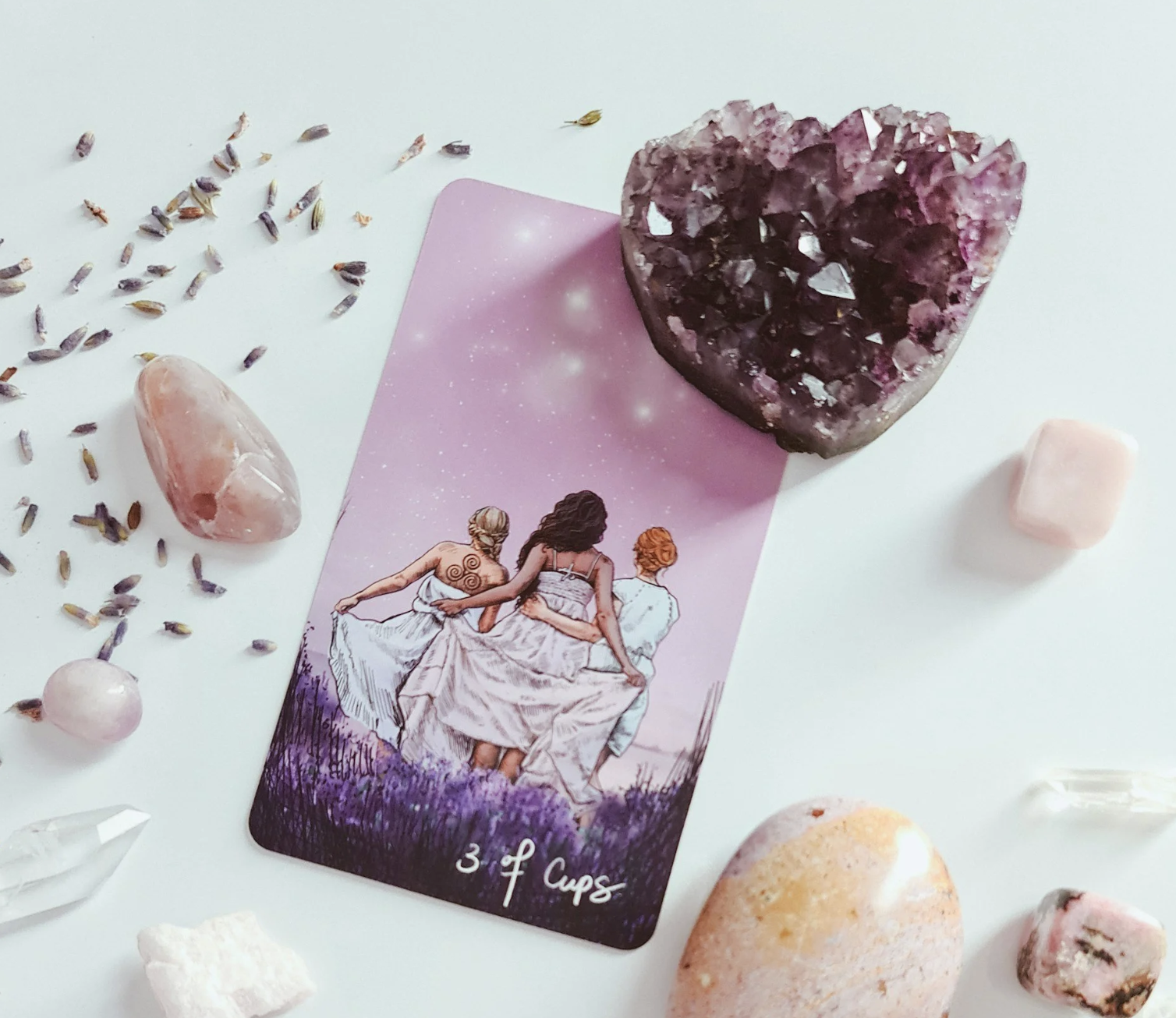
The Wheel That Changed Everything: How I Found My Rhythm Again
Before, I used to think rest was weakness.
But the Wheel taught me that rest is rhythm.
When the earth sleeps, it isn’t failing — it’s regenerating.
The same is true for us.
For most of my life, I measured progress in straight lines.
Goals. Deadlines. Checklists. Finish lines.
But real life, especially for those of us who are neurodivergent, intuitive, or emotionally attuned, doesn’t move like that. It loops. It spirals. It breathes in and out.
It wasn’t until I began living in rhythm with the Wheel of the Year that things started to make sense again.
Remembering That Life Is Cyclical
The Wheel of the Year, an ancient calendar that follows the turning of the seasons, invited me to slow down and listen.
To nature.
To my body.
To the whispers of my own energy.
Each season became a mirror.
Spring reminded me to begin again without guilt.
Summer showed me how to celebrate growth, not chase perfection.
Autumn taught me to let go of habits, expectations, and old versions of myself.
Winter became permission to rest without apology.
For the first time, I didn’t feel like I was “behind.”
I realized I wasn’t lost, I was just in a different season.
Healing My Relationship With Rest
Before, I used to think rest was weakness.
But the Wheel taught me that rest is rhythm.
When the earth sleeps, it isn’t failing; it’s regenerating.
The same is true for us.
When I began honoring the darker, quieter phases of my own cycle, the inward energy, the pauses, the moments when I couldn’t push any harder, I found that my creativity, my health, and even my self-compassion deepened.
Rest stopped being something I had to “earn.”
It became part of the practice.
A Framework That Honors Neurodiversity
As someone who experiences the world in vibrant colors and layered emotions, I’ve always needed structure with soul, a rhythm that grounds without confining me.
The Wheel gave me that.
It’s flexible but predictable, intuitive but structured, a compass that helps me align my work, my wellness, and my spirituality without burning out.
For neurodivergent minds, having a clear pattern to follow while still honoring our natural energy shifts can be revolutionary.
The Wheel permitted me to flow instead of fighting what was natural.
Why I Keep Coming Back
Every year, the Wheel turns.
Every time, I learn something new.
It’s not about “mastering” the cycle, it’s about participating in it.
Living in sync with the Wheel has turned my wellness journey into something sustainable, soulful, and sacred.
It’s why we built The Quiet Power Studio, a space for others to explore their own rhythm, their own version of balance, their own alchemy of rest and action.
Because in the end, health isn’t about fighting the seasons of your life, it’s about learning to dance with them.
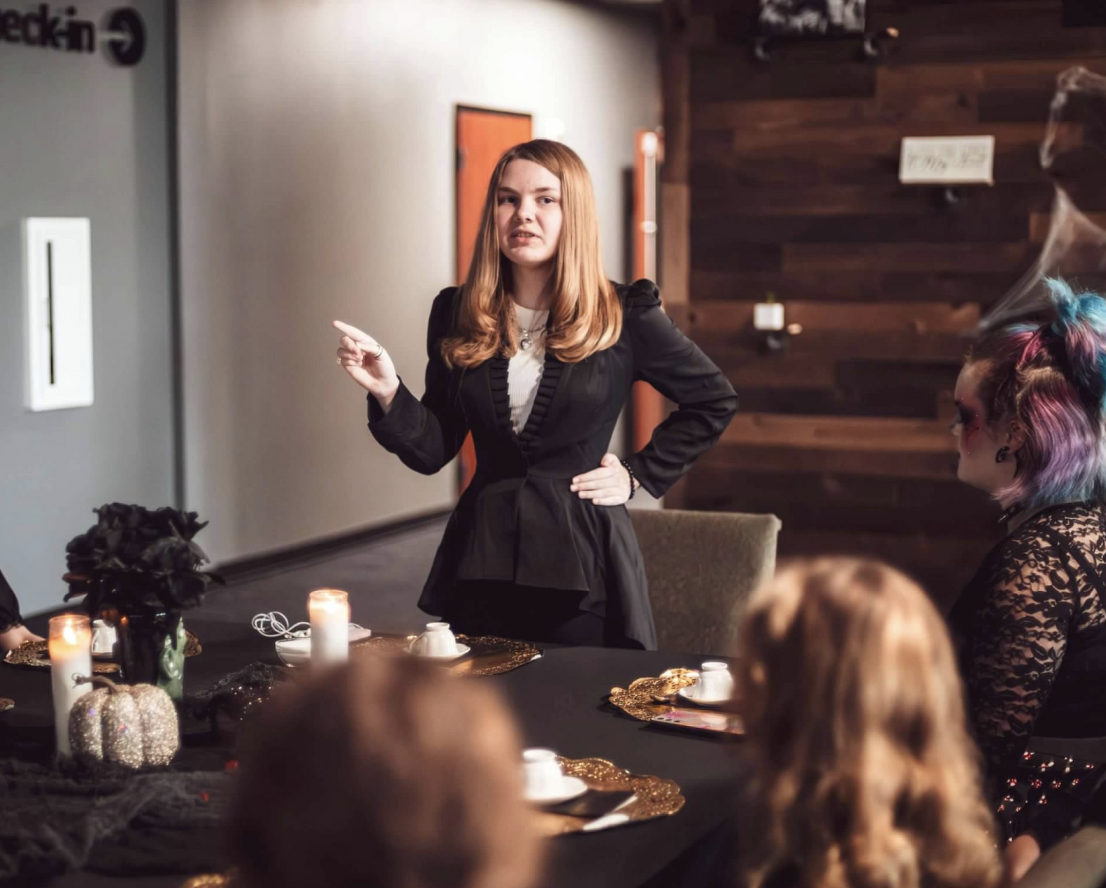
Building the Next Generation of Leaders
When we invest in teaching young girls leadership skills like project management, planning, critical thinking, and teamwork, we aren’t just preparing them for success — we’re preparing them to change the world.
When we invest in teaching young girls leadership skills like project management, planning, critical thinking, and teamwork, we aren’t just preparing them for success — we’re preparing them to change the world.
Why Start Early?
Girls are natural leaders. They’re full of ideas, energy, and heart. But without early experiences that allow them to practice real-world skills, that natural leadership potential can fade into the background.
By introducing leadership, project management, and planning skills early, we help girls:
✨ Develop confidence in their abilities
✨ Learn how to organize ideas into action
✨ Communicate effectively and advocate for themselves and others
✨ Turn vision into reality, step by step
Early leadership experiences create a foundation for lifelong success — not just in careers, but in relationships, communities, and self-advocacy.
Why We Teach Leadership
Through our programs, including our Emerald Leadership Programs, girls are guided through hands-on experiences that cover:
Goal Setting: How to dream big — and set achievable steps to get there.
Project Management: Breaking big ideas into tasks, setting timelines, assigning roles, and managing resources.
Team Leadership: How to inspire others, delegate responsibility, and build a culture of collaboration.
Critical Thinking and Problem Solving: Learning to navigate challenges creatively and with resilience.
Planning and Organization: Skills like creating schedules, budgeting time and money, and adapting plans as needed.
These are the same skills Fortune 500 CEOs, tech innovators, and global changemakers use every day — and our girls are learning them now.
More Than Just a Skillset
Teaching leadership isn't just about skills. It’s about mindset.
Girls learn that they don’t have to wait for permission.
They don’t have to have all the answers before they start.
They don't have to fit into an outdated mold of what leadership looks like.
By doing this, you can empower girls to lead with heart, authenticity, creativity — and a little rebellious spirit.
The Future is Fearless
Imagine a world where girls grow up believing their ideas matter. Where they are given tools to make things happen. Where leadership is seen as courage plus action — not just authority or title.
That’s the fearless future we believe in.
Because when girls learn to lead, they don’t just change their own lives. They change the world.

Supporting Girls as They Discover Who They Are
It’s during childhood and adolescence that girls explore not just their passions and dreams, but also their identities, boundaries, and values — shaping who they are and how they show up in the world.
Today, supporting girls means embracing the full spectrum of who they are becoming, including their exploration of gender identity, personal boundaries, and self-expression.
The journey of self-discovery is sacred.
It’s during childhood and especially adolescence that girls explore not just their passions and dreams, but also their identities, boundaries, and values — shaping who they are and how they show up in the world.
Today, supporting girls means embracing the full spectrum of who they are becoming, including their exploration of gender identity, personal boundaries, and self-expression. But we don’t often seen this taught in school or even home and we get it, as adults we want our vision and often forget that our children’s lives, while influenced by the experiences we give them are in the end….theirs to discover.
Identity Development: A Natural (and Necessary) Journey
Self-discovery is a critical part of growing up.
According to research published by the American Psychological Association (APA), adolescence is a key period for developing a sense of identity — including understanding gender roles, questioning societal expectations, and forming a stable sense of self.
(Source: APA, Developing Adolescents: A Reference for Professionals, 2002)
During this time, girls (and those who identify with the girl experience) are:
Exploring gender identity and gender expression
Testing boundaries and seeking independence
Learning to advocate for their physical and emotional boundaries
Defining their values and beliefs
Our role isn’t to define who they should be — it’s to create spaces where they can explore safely, authentically, and without judgment.
Supporting Gender Identity Exploration
Gender identity — a person’s internal sense of being female, male, both, neither, or somewhere along the gender spectrum — often becomes more consciously explored during adolescence.
According to a 2022 survey from the Trevor Project, about 25% of LGBTQ+ youth identify as nonbinary or gender-expansive.
(Source: The Trevor Project, 2022 National Survey on LGBTQ Youth Mental Health)
Affirmation matters. Research consistently shows that when young people are affirmed in their gender identity and expression, they experience:
Lower rates of depression and anxiety
Improved self-esteem
Stronger resilience and mental health outcomes
(Source: Journal of Adolescent Health, 2021)
At Magical Rebel, we affirm every girl — cisgender, transgender, or nonbinary — on their journey of self-discovery.
Everyone deserves to be celebrated for who they know themselves to be.
Teaching Healthy Boundaries
Discovering identity also means discovering boundaries.
Girls need skills to set, communicate, and enforce boundaries — from emotional limits in friendships to physical autonomy and consent.
According to the National Sexual Violence Resource Center (NSVRC), early education around personal boundaries leads to:
Stronger interpersonal relationships
Reduced vulnerability to abuse
Greater self-respect and respect for others' boundaries
(Source: NSVRC, Preventing Child Sexual Abuse: Boundaries and Consent Education)
In our programs, girls practice:
Saying “no” with confidence
Recognizing when their boundaries are being crossed
Respecting others' limits
Trusting their intuition
Creating safe, affirming spaces for self-exploration
Respecting and uplifting every girl's gender identity and expression
Teaching boundary-setting as a vital leadership skill
Celebrating individuality and authenticity
These are lifelong skills for leadership, wellness, and empowerment.
Because discovering who you are — and standing proudly in that truth — is the ultimate act of rebellion against a world that tries to limit you.
We don’t just want girls to find themselves. We want them to fall in love with who they are becoming.
🌟 Magical Rebel: Rebel Hearts. Fearless Futures. 🌟
When Girls Begin to Feel Invisible — And Why It Matters
Multiple studies have found that around age 8, girls’ confidence levels begin to dip — and by the time they reach middle school (ages 11-13), many girls experience a sharp decline in self-esteem compared to boys.
Research shows a troubling pattern: many girls begin to feel invisible by late elementary and middle school — a critical time when their confidence, self-perception, and leadership potential are forming.
Understanding when and why this happens is essential if we want to change the story.
The Age When Confidence Starts to Drop
Multiple studies have found that around age 8, girls’ confidence levels begin to dip — and by the time they reach middle school (ages 11-13), many girls experience a sharp decline in self-esteem compared to boys.
A 2018 survey by Ypulse and the Confidence Code for Girls authors (Katty Kay and Claire Shipman) found that girls’ confidence drops by 30% between ages 8 and 14.
(Source: Confidence Code for Girls, Katty Kay & Claire Shipman, 2018)A study published in the Journal of Adolescence noted that during early adolescence, girls report feeling less competent, less comfortable taking risks, and less seen by teachers, peers, and adults compared to boys.
(Source: Journal of Adolescence, Vol. 27, Issue 5, 2004)
This means by middle school, many girls begin to silence themselves — questioning their ideas, hesitating to lead, and shrinking back from visibility at the exact time they should be stepping into their power.
Why Does This Happen?
The reasons are layered, but some key contributors include:
Socialization and Gender Expectations: Girls are often praised for being "nice," "quiet," and "agreeable," while boys are praised for being "bold" and "assertive."
Media Representation: Girls see fewer examples of women in leadership roles, adventure stories, or fields like STEM, reinforcing narrow ideas of what they can become.
Fear of Judgment: As girls grow, they become more aware of how they are perceived. They often internalize societal pressure to "fit in" and avoid standing out.
Academic and Social Environments: Even well-meaning adults can unintentionally send signals that girls should defer, be modest, or prioritize likability over leadership.
The Cost of Invisibility
When girls feel invisible, the consequences are profound:
They are less likely to raise their hands in class.
They are less likely to pursue leadership opportunities.
They second-guess their talents and ideas.
They hesitate to take risks — essential for innovation, leadership, and self-discovery.
A study by the American Association of University Women (AAUW) highlights that early losses in confidence can translate into fewer girls pursuing leadership tracks in school, fewer women in top positions, and an enduring gender gap in many fields.
(Source: "Where the Girls Are: The Facts About Gender Equity in Education," AAUW, 2008)
It’s Time to Fight Back
We must refuse to let girls disappear into the background.
It’s time to create spaces where girls are:
Encouraged to be bold and visible.
Taught to project manage their dreams into action.
Connected with mentors who model diverse, authentic leadership.
Empowered to lead with courage, resilience, and heart.
We don’t tell girls to be smaller, quieter, or less daring.
We tell them the world needs more of exactly who they are.
Moving Forward: A Call to Action
If we want fearless futures, we have to make sure girls feel seen, heard, and celebrated — especially during those crucial years between 8 and 14.
🌟 Stay visible. Stay powerful. Stay rebellious. 🌟
Sources:
Katty Kay & Claire Shipman. The Confidence Code for Girls, 2018.
"Where the Girls Are: The Facts About Gender Equity in Education," American Association of University Women (AAUW), 2008.
Pomerantz, E. M., Altermatt, E. R., & Saxon, J. L. (2002). "Making the Grade but Feeling Distressed: Gender Differences in Academic Performance and Internal Distress." Journal of Adolescence, Vol. 27, Issue 5.

Rebel Hearts. Fearless Futures.
At Magical Rebel, we believe in the untamed power of those who dare to imagine something different — something better. Our mantra, "Rebel Hearts. Fearless Futures.", is more than just words. It’s a movement. A call to the dreamers, the builders, the bold-hearted leaders who aren’t waiting for permission to change the world — they’re already doing it.

Do you believe in the untamed power of those who dare to imagine something different — something better? Our mantra, "Rebel Hearts. Fearless Futures.", is more than just words. It’s a movement. A call to the dreamers, the builders, the bold-hearted leaders who aren’t waiting for permission to change the world — they’re already doing it.
We were founded with a simple but profound belief: those with rebel hearts shape the future. Not the ones who stay quiet. Not the ones who play it safe. But the ones who challenge, who question, who imagine new paths when old ones no longer serve. Magical Rebel exists to equip these leaders — no matter their age, background, or starting line — with the tools, confidence, and community to create a fearless future.
The Power of the Magical Rebel Leadership Programs
At the core of our work lies the Magical Rebel Leadership Programs, a series of leadership journeys designed to ignite courage, creativity, and change. Each Emerald experience is rooted in our signature approach:
✨ Lead with vision.
✨ Act with heart.
✨ Build with grit.
Our programs blend mentorship, skill-building, and real-world opportunities, giving participants the chance to not only dream but do. Whether it’s through entrepreneurship training, advocacy projects, or creative innovation labs, we empower our Rebels to step fully into their power — on their terms.
Magical Rebels are thinkers, makers, movers, and catalysts. They don’t accept the status quo. They rewrite it.
Why Rebel Hearts Matter
Why do we center rebellion in a world that often rewards conformity? Because rebellion is the birthplace of progress. Every major change — every leap forward in human rights, innovation, and leadership — began with someone who refused to accept "this is just the way it is."
Rebel hearts are courageous enough to imagine what could be — and fearless enough to make it happen.
That’s who we are at Magical Rebel. That's who we nurture through our Emerald Leadership Program. And that's the future we're building, one fearless leader at a time.
Join the Movement
If you’ve ever been told you're "too much," "too ambitious," "too different," or "too passionate",,,,, good.
You're exactly who the future needs.
It’s time to unleash your rebel heart. It’s time to forge a fearless future.
Learn more about Magical Rebel and the Emerald Leadership Program — and discover how you can be part of a revolution rooted in magic, courage, and unstoppable change.
🌟 Rebel Hearts. Fearless Futures. Only at Magical Rebel. 🌟